

5% More Yield, 75% Labor Savings, 8,000 Acres: One Grower’s Results





How one New York vegetable operation replaced broadcast herbicides and hand crews with a single precision application system and came out ahead on every line of the P&L.
(Sponsored) For large-scale vegetable growers, weed control has quietly become one of the most expensive and unpredictable lines on the P&L. Herbicide options keep narrowing as regulators remove approvals. Labor costs keep climbing as crews get harder to find. And broadcast applications, the fallback when both of those fail, carry their own cost: crop stress, chemical injury, and yield drag that shows up at harvest.
Jason Gaylord knows this math well. He operates My T Acres, an 8,000-acre conventional vegetable operation in upstate New York growing red beets, carrots, potatoes, cabbage, onions, peas, and green beans. A few years ago, weed control had become the farm’s number one operational problem. With fewer herbicides gaining regulatory approval in New York, the only reliable option was waiting until crops had true leaves before applying broadcast treatments. By then, weeds had already gotten a head start, and costly hand crews were the only way to clean them up.
“The SharpShooter has totally changed the way we farm. We have almost all but eliminated the use of hand labor, while improving plant health and yield.”
— Jason Gaylord
After evaluating precision weeding options at World Ag Expo in Tulare, CA, Gaylord invested in Verdant Robotics™ SharpShooter™, a precision application system built for specialty crops. The deciding factors were the technology itself and confidence in the Verdant team.
WHAT CHANGED THE ECONOMICS
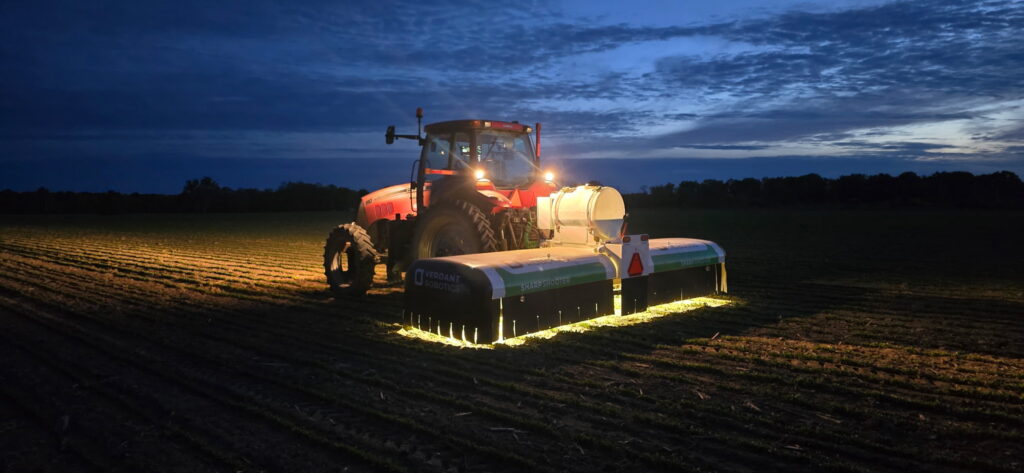
SharpShooter™ works differently than broadcast or even banded approaches. Using Aim & Apply™ technology, it detects individual plants in real time and delivers targeted micro-liter shots only to confirmed weed targets. Instead of waiting for crop canopy development to justify a broadcast pass, the system can enter the field immediately after germination, when weeds are at their smallest and most vulnerable.
That early-entry capability is the operational shift that changes the math. Fewer passes. No waiting. No weed escapes getting ahead of you during the window when they are easiest and cheapest to control. For operations that have built their entire weed program around the constraints of broadcast timing, removing that constraint restructures the season.
At My T Acres, that single change eliminated the need for post-emergence broadcast
herbicide application. And the positive results can be seen within one season.
- 75% reduction in hand weeding costs
- 40–50 acres covered per 24-hour operating day
Hand weeding on beets and carrots is among the most labor-intensive work in vegetable production. A 75% reduction is not just a cost line improvement. It is a fundamental change in how the operation is staffed and scheduled through peak periods.
The herbicide reduction carries its own downstream value. Fewer inputs purchased, fewer passes made, less crew time spent mixing and loading, and less exposure to the compliance and residue risk that comes with heavy broadcast programs.
Throughput held up. At 40 to 50 acres per 24-hour day, the system kept pace with the operation’s coverage demands without adding equipment or crew. He is projecting a ROI in less than two years.
THE RESULT THAT SURPRISED HIM MOST
Those metrics were the goal. The last was not.
~5% yield improvement across crops
Broadcast herbicide applications have always carried a hidden cost that rarely shows up in the input budget: crop stress. Traditional timing requires waiting until plants have true leaves before spraying, and by that point the chemistry doing the job is also doing damage. Burning, stunting, and uneven stand development are accepted as normal. Most growers have never seen their crops without that stress because broadcast has always been the only option.
The yield gain was not the goal. It was the result of eliminating something growers had long assumed was unavoidable.
“After using it for a season, there is no doubt in my mind it was one of the best decisions for the future of our farm.” — Jason Gaylord
BUILT TO RUN
One concern that surfaces consistently with precision ag equipment is complexity: who services it, how long it takes to get running, and what happens when something breaks mid-season. At My T Acres, the system was operational within days of delivery. Operator training was fast. The machine’s modular design means most repairs can be handled with standard hand tools, without waiting on a technician.
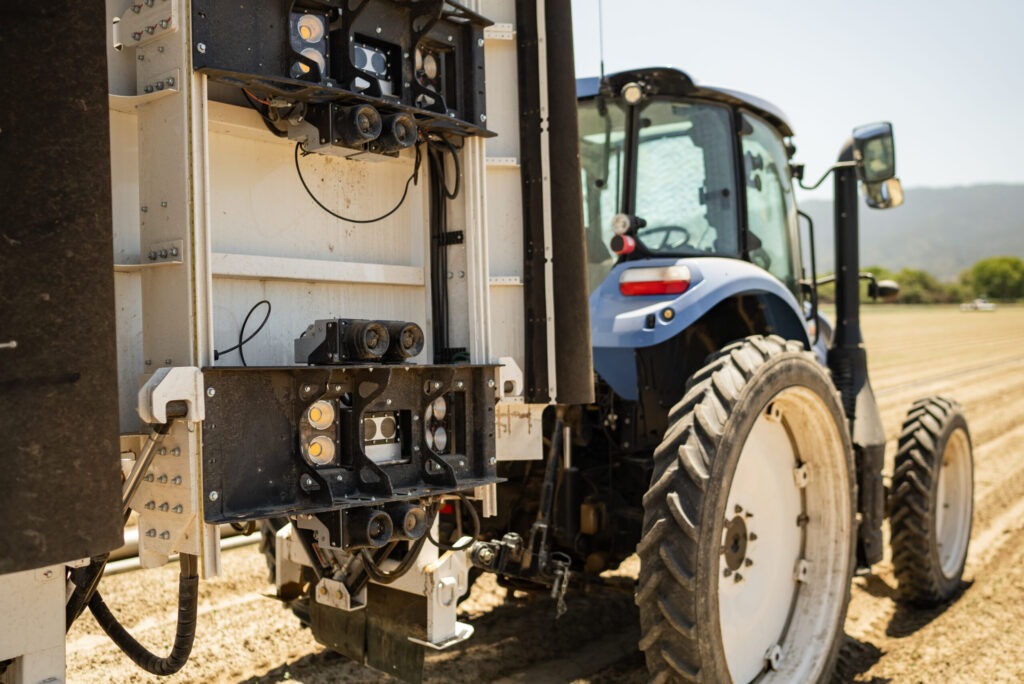
track, and apply to individual targets with millimeter-level accuracy.
ADVICE TO OTHER GROWERS
Gaylord’s advice to other growers is direct. The upfront investment feels significant. The unfamiliar technology adds another layer of uncertainty. But after one full season, the hesitation gave way to conviction.
Visit verdantrobotics.com to learn more.