

Mesotunnels and muskmelons: optimization of organic row covers
A research-based deep dive into using mesotunnels to optimize row covers in sustainable ag and certified organic systems.





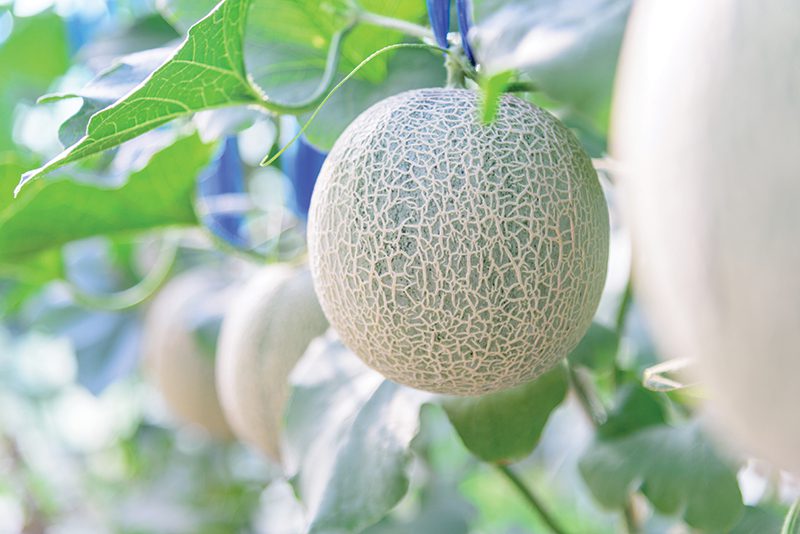
Organic and sustainable specialty crop growers face a unique balancing act of producing high-quality crops while preserving the health of the environment for seasons to come. Each growing season brings an army of challenges: insect pests, diseases, weeds, sunburn, frost, mammals and increasingly unpredictable weather.
In organic systems where the toolbox is more limited, managing these stressors can be especially tough. Many growers rely on OMRI-listed pesticides, but they’re not always effective. Repeated applications are costly, labor-
intensive and environmentally taxing, leading to issues like copper accumulation in the soil. Inconsistent product performance against key pests and diseases increases the risk of crop loss and chips away at already narrow profit margins.
Row cover aid
Physical tools like row covers have become staples in organic integrated pest management (IPM). A 2022 survey of 377 organic specialty crop growers across the Midwest, Southeast and Northeast found that insect pests were the top production challenge, followed by heavy rainfall, disease and weeds More than 60% of growers reported using row covers not just for pest control but also to buffer extreme weather and reduce the reliance on chemicals.
Not all row covers are equal, especially given the diversity of crops, rotations and infrastructure, particularly on organic farms. Some growers produce a dozen or more species each season. While many growers are familiar with low and high tunnels, each comes with its own set of benefits and trade-offs.
In recent years, a middle-ground option has emerged: mesotunnels. As the name suggests, “meso” means “middle,” and that’s exactly where these tunnels fall in size and structure. Standing 36 to 48 inches tall, mesotunnels are taller than low tunnels but shorter than high tunnels, offering season-long protection. They are built with steel conduit hoops and covered with a fine nylon mesh, such as ExcludeNet or ProtekNet, which allows light, air, sprays and rainfall to reach crops while keeping insect pests out. The mesh can be reused for multiple seasons, especially if stored properly during the off-season.
Flexibility
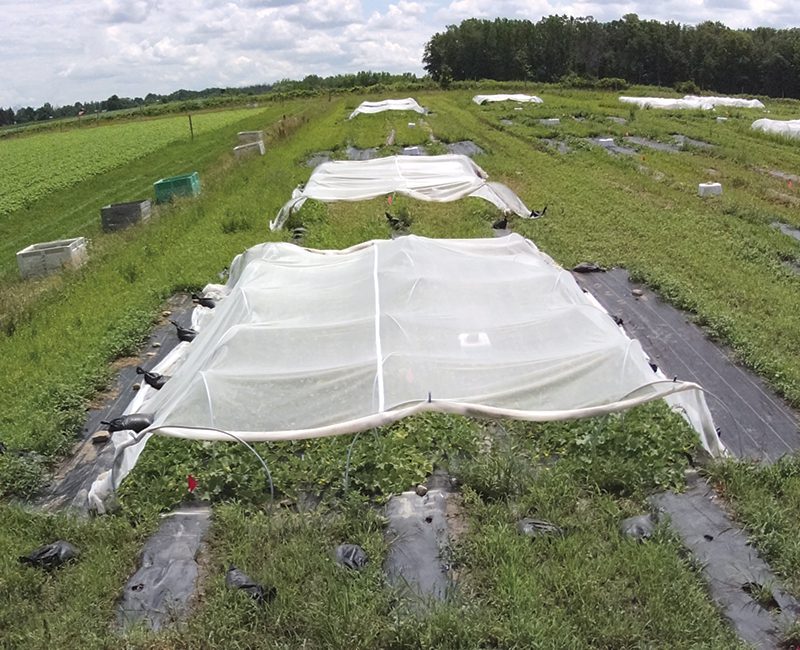
trials evaluating pollination strategies. Photos courtesy of Sean Murphy.
Mesotunnels are not a one-size-fits-all solution, but they show promise as a flexible tool in organic production, especially in specialty crops. At Cornell and partner institutions in southern and midwestern states, we tested mesotunnels in cucurbit systems where insect-vectored diseases are a recurring issue.
Pests like striped cucumber beetles and squash bugs don’t just cause damage by feeding on crops — they also spread bacterial pathogens that can cause plant death. For example, bacterial wilt is caused by the bacterium Erwinia tracheiphila and spread by cucumber beetles. Cucurbit yellow vine disease, caused by the bacterium Serratia marcescens, spreads via squash bugs. These pests can cause significant losses for smaller-scale organic farmers.
A key question surrounding the use of exclusion netting and row covers is how to balance pollination with the benefits of excluding insect pests. Trials in New York, Iowa and Kentucky tested different approaches. One method involved clipping the tunnel ends open during flowering, allowing pollinators to access the crop and achieve fruit set.
After pollination, the netting was closed and secured with sandbags. Completely removing the tunnels during flowering caused pest populations to surge. When the netting was reapplied, many insect pests remained inside for the rest of the season, which eliminated the protective benefits of the system. The clipped-end method provided a more balanced solution, supporting pollination while providing pest exclusion.
Bee aid
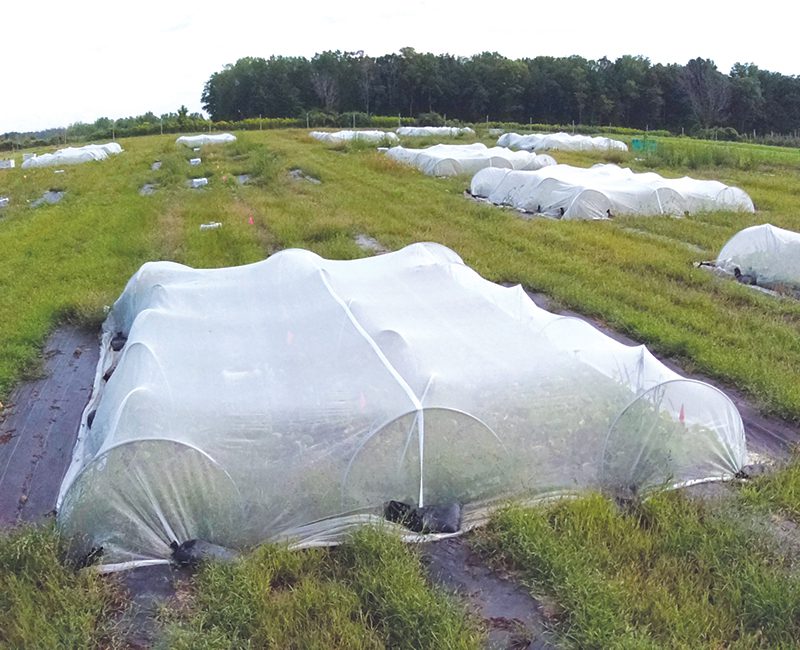
Pollinators, including honeybees and native squash bees, successfully entered tunnels through the open ends, while pest insects were less successful. After the ends were closed, few pests were found inside compared to the full removal treatment, which had pest numbers similar to uncovered plots.
Mesotunnels are not a silver bullet, but they are a valuable tool in the organic IPM toolbox. Like any system, they work best when used alongside practices like pest scouting, crop rotation and cultural controls.
Our initial trials focused on acorn squash, but growers noted that the early-season labor made it worthwhile only for higher-value crops. We shifted focus to muskmelon, where full-season protection offers better returns. To maximize ROI, we optimized materials and adapted mesotunnel structures for fall cole crops like cabbage, extending their use beyond a single specialty crop per year.
Hands-off help
While the setup can be labor-intensive, once in place mesotunnels allow for a relatively hands-off approach to pest and disease protection throughout the growing season.
We are exploring complementary practices — cultivar selection, cover cropping and weed management — that may improve outcomes under mesotunnels, influencing yield, disease pressure, insect populations, soil health and microclimate.
Though mesotunnels may not be the best fit for large-scale conventional operations, they hold promise for small to mid-sized farms facing rising pest pressures while reducing chemical and plastic inputs. As food production evolves, mesotunnels offer a way to balance protection, productivity and sustainability, supporting resilient, diversified farming.
References
Cheng, N., Zhang, W., & Gleason, M.L. (2025). Controlling Pests and Diseases using mesotunnels: Understanding organic cucurbit crop growers’ preferences and choices. SSRN Electronic Journal. doi:10.2139/ssrn.5212644.
Kaitlin Diggins and Sarah Pethybridge are located at Cornell AgriTech in Plant Pathology and Plant-Microbe Biology at Cornell University. Pethybridge is a research and extension pathologist working on vegetable diseases. The goal of her program is to conduct novel studies on pathogens and diseases affecting vegetables in New York to underpin profitability and sustainability of the industry. Diggins is a Ph.D. candidate whose dissertation research focuses on the development of integrated pest management programs in mesotunnel production systems, with a particular focus on increasing climate-resilience and plant health in sustainable agriculture and certified organic specialty crops.