

Bank on the basics
At Georgia’s G&R Farms, variety choice and agronomic fundamentals drive Vidalia onion production. Hear from G&R’s longtime head grower.





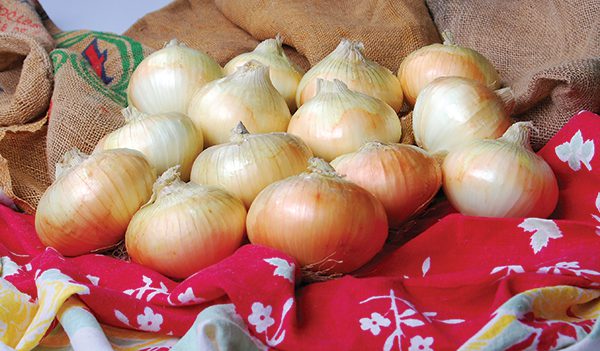
G&R Farms of Glennville, Georgia, is the longest-running grower of Vidalia onions in the U.S., and Cliff Riner, the 80-plus year-old farm’s current VP of production, has been with the company for 24 years.
Riner said over 90% of the Vidalias grown at G&R are sold direct to retail supermarkets like Kroger, Sam’s Club and Costco, as well as local independent grocers such as Harris Teeter. Some of the onions are also sold to restaurants via a distribution partnership with Restaurant Depot.
“They’re more sought after [than other onion varieties], so you get a better price,” he said. “It’s the premium onion and the sweetest and mildest onion, and consumers recognize that value.”
Vary your varieties
If there’s anyone who knows the ins and outs of Vidalia onion production, it’s Riner. He has a few tips to share with growers.
For starters, Riner advised planting a diverse selection of Vidalia varieties. This is largely to help manage farm workers’ hand harvesting of the onions. By staggering the planting dates among different varieties (with different maturity dates) crews can move from plot to plot rather than having to harvest an entire crop in one shot.
Currently, there are roughly 15 to 30 commercial Vidalia onion varieties for farmers to choose from. University of Georgia Extension Ag and Natural Resources (ANR) agent Ross Greene collaborated with a certified organic grower in Evans County to conduct an on-farm organic onion variety trial in 2025. Greene evaluated seven organic Vidalia varieties for overall yield and size distribution, with the goal of helping farmers in Georgia select the right varieties.
Results showed that BASF Nunhem’s ‘Vidora’ and ‘1011’ varieties provided the highest field weights and marketable yields, and both varieties generated the highest returns above production expenditures per acre. Notably, the most popular commercial Vidalia onion variety, ‘Candy Joy,’ finished in the middle of the pack for both field weight and marketable yields. Greene cautioned that the trial represents only one year of data.
“Selecting a top-performing variety increased net returns by up to $3,820 per acre,” said Greene. “By improving organic onion performance, this project enhances whole farm profitability, strengthens grower-buyer relationships and supports the longterm competitiveness of the Vidalia onion industry. Although organic onions represent a small percentage of total acreage, improving their performance strengthens wholefarm systems and supports the long-term stability of the Vidalia onion industry.”
Bank on the basics
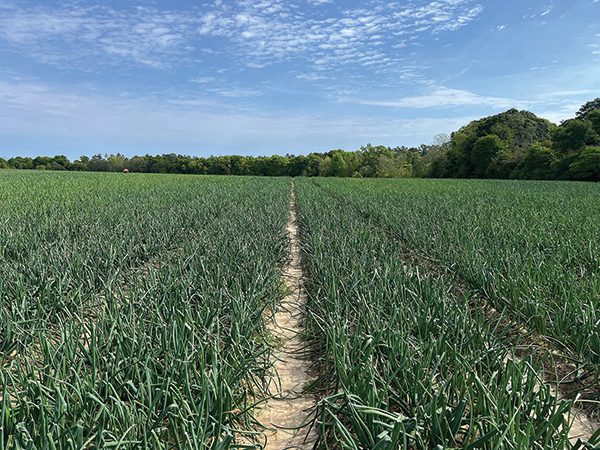
When it comes to managing the crop during the growing season, Riner said its important growers have the basics — things like soil bed preparation and precisely planning out which varieties will be planted based on soil type and maturity windows — down pat because “there are no shortcuts.”
“You can’t really fool Mother Nature, so if I was advising anybody, I’d tell them to just start with the basics first: Are you planting them on time? Are you planting them the right way?” Riner said. “And then probably the biggest benefit we have seen is the most basic one: crop rotation. When we stay on a good crop rotation, it works wonders versus when we don’t.”
Crop rotation helps G&R Farms keep soil-borne disease pressure in check, Riner added. For now,
insects are not a big management concern in his region, other than the occasional thrip flare-up.
Start clean, stay clean
Riner also said it’s important to start clean when you plant a new field. Because Vidalias are a multi-season crop —planted in the spring,overwintered and harvested the following year— there’s a wide window for issues that can make life hard for the grower. Starting clean gives the onion plants the best shot at making it through that long window.
Having a regular field scouting program to keep an eye on the plants throughout the year and sticking to a regular soil and tissue sampling cadence are also important, Riner said.
Riner advises growers interested in getting into Vidalia production to stay engaged with University of Georgia Extension for timely agronomic information.
“We spend as an industry about $200,000 a year with the University of Georgia on research for production practices, and the Extension office is integral in doing the research and passing that information along to growers,” he said