

Ag CEO Q&A: What rising fertilizer costs mean for growers this season
Timac Agro USA’s Jake Tanis says efficiency, planning and agronomic strategy will define the 2026 crop year





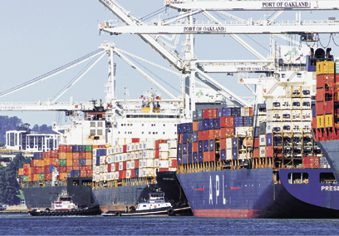
Rising geopolitical tensions in the Middle East alongside a tightening global fertilizer supplies market are forcing American growers to rethink fertilizer purchasing strategies heading into the second half of 2026.
According to Jake Tanis, CEO of Timac Agro USA, disruptions tied to the Strait of Hormuz earlier this year sent shockwaves through global fertilizer markets and created another layer of uncertainty for producers already facing compressed margins and elevated input costs.
“The market priced that risk immediately,” Tanis said in a recent interview, referencing the disruption of fertilizer shipments following military escalation in the region.
The Strait of Hormuz remains one of the most critical shipping corridors in the world for fertilizer trade, particularly for nitrogen products derived from natural gas. Nations bordering the Persian Gulf — including Qatar, Saudi Arabia and the United Arab Emirates — play a major role in supplying global nitrogen fertilizer markets.
When conflict escalated in late February, fertilizer markets reacted sharply. Here’s Tanis’ full Q&A conversation on what’s happening in the Middle East when it comes to fertilizer logistics:
Q: Jake, let’s start with the Strait of Hormuz. For farmers and dealers who don’t follow geopolitics, why does a conflict in the Middle East hit their input bill here in the U.S.?

Jake Tanis (JT): It comes down to geography and chemistry. The Strait of Hormuz is about 21 miles wide at its narrowest point, and roughly one-third of the world’s seaborne fertilizer trade flows through that corridor. The Persian Gulf nations — Saudi Arabia, Qatar, the UAE, Kuwait, Iran — sit on enormous reserves of natural gas, and natural gas is the primary feedstock to make nitrogen fertilizers. Urea starts with ammonia. Ammonia starts with natural gas. So when those shipping lanes close, it’s not just oil and gasoline prices that spike — it’s the price of the nitrogen we apply to every acre of corn, wheat, and cotton in America.
When the U.S. and Israel launched Operation Epic Fury on February 28, 2026, those trade lanes went from restricted to effectively closed. Ships were being struck by projectiles. Sea mines were deployed. Commercial operators aren’t going to risk a vessel load of fertilizer sailing into that. The market priced that risk immediately.
Q: How fast did prices move? Give us the numbers.
JT: Fast and hard. Urea at the New Orleans import hub jumped roughly 32% in the first week alone — from around $516 per metric ton on the Friday before the strike to $683 by the following Thursday. By mid-March, global urea was touching $600 per metric ton. MAP and DAP surged above $700 per metric ton. UAN crossed $400. Those numbers matter in context: pre-pandemic, these products traded in a $250 to $350 range. We’ve been living in an elevated market since 2022, and this was another step up the staircase.
The one relative outlier was potash, which was more stable initially because Canada — not the Middle East — is the primary source for U.S. potash imports. But even that has edged up as general market anxiety drove buyers to cover positions quickly.
“Our job isn’t to sell fertilizer. Our job is to help farmers get the best return per acre on every input dollar they spend — and right now, that job has never been more important.”
Jake tanis, Timac Agro USA
Q: The U.S. imports a significant share of its nitrogen. How exposed are American buyers, really?
JT: More exposed than most growers realize. The United States produces about three-quarters of what it consumes in fertilizer, which sounds reassuring until you dig into the specifics. For urea in particular, Russia and Qatar have historically been top suppliers to U.S. import terminals. Qatar sits squarely in the Persian Gulf. Russia has been a geopolitical wildcard since 2022. Those two supply streams represent meaningful import volume, and both have been disrupted simultaneously at different points in the last four years.
The timing of this disruption was also cruel for American agriculture. Vessels from the Persian Gulf to the U.S. Gulf Coast take roughly 30 days in transit. So supply disruptions that happened in late February and early March don’t just affect prices on March 1st — they affect whether product is physically available during peak spring application windows in March and April. You can’t just flip a switch and reroute a tanker.
Breakdown by fertilizer type
Q: Let’s go product by product. Start with UAN — urea ammonium nitrate solution — which is critical for corn production in our core geographies.
JT: UAN is where the squeeze is felt most acutely in the Corn Belt and mid-Atlantic markets. It’s a liquid nitrogen source that’s convenient, versatile and deeply embedded in how row crop farmers manage their nitrogen programs. And UAN supply is genuinely tight globally — not just because of Hormuz, but because Ukraine had historically been a significant UAN producer and exporter, and that production capacity has been significantly disrupted since 2022.
So you have a product that was already tight entering 2026, then you add a Gulf supply disruption on top of it. UAN cleared $400 per metric ton in March. Regional availability was spotty, particularly for buyers further from major river or rail terminals. The farmers who had locked in supply agreements in the fall or early winter were in a far better position than those going to the spot market in March.
What this means for our growers is that the value of agronomic efficiency on nitrogen goes up dramatically in this environment. When nitrogen costs what it costs today, the question isn’t just ‘how many gallons of UAN am I putting on?’ — it’s ‘how do I make every pound of nitrogen count?’ That’s exactly where our technology and our ATC agronomists create real value for the farmer.
Q: What about urea? Granular urea is a staple input — how is the market looking for summer and fall?
JT: Urea has been on a wild ride. It peaked above $600 globally in March, and as of early May it’s pulled back — trading around $548 per metric ton. That’s down roughly 22% from the March peak, but it’s still 14% above where it was a year ago. The short-term relief reflects a few things: some ceasefire signals came out of the Middle East that allowed some limited shipping movement, China loosened some export restrictions, and spring demand in the Northern Hemisphere is now largely committed — buyers have either bought or decided not to buy at these prices.
For summer and fall planning, I’d be cautious about assuming prices come all the way back down. The structural risks haven’t gone away. The Strait could close again. China can flip export policy with little notice. New nitrogen capacity additions globally are a few percent per year — not enough to dramatically change the supply picture. My view is that we’re in a ‘structurally elevated’ market for the foreseeable future, with volatility events possible on either side.
Q: On MAP and phosphates — you run production in Americus, Georgia. How does the phosphate picture look?
JT: Phosphates had already been under pressure entering 2026. MAP was above $800 per metric ton in the summer of 2025 — a 36% run-up just in the first half of that year. The Gulf disruption pushed MAP and DAP back above $700 in March. Two dynamics are in play here: the Gulf states are important phosphate exporters, and Morocco’s OCP Group — a massive phosphate player — is exposed to shipping route disruptions even though Morocco itself is on the Atlantic side.
Saudi Arabia has become the U.S.’s largest phosphate supplier, displacing Chinese product after China’s export restrictions tightened. That dependency on a single large supplier in a volatile region is a real risk that the broader industry hasn’t fully priced in yet.
Q: And potash — you mentioned it was more insulated. Is that still the case?
JT: Potash held up relatively well in the initial shock because Canada provides the vast majority of U.S. imports and isn’t affected by the Strait. But potash has its own complications. The U.S.-Canada trade friction around tariffs created some uncertainty earlier in 2026 that lifted U.S. wholesale values even without a direct supply issue. Russia is also a major global potash supplier, and those trade flows remain complicated by sanctions.
For growers, potash is closest to pre-2020 pricing levels compared to nitrogen and phosphate. That’s some marginal relief in a tight budget environment. But ‘closest to normal’ doesn’t mean ‘cheap.’ We’re still talking $330 to $475 per ton depending on regional basis and timing.
Q: The American Farm Bureau surveyed 5,700 farmers and found 70% said fertilizer is so expensive they can’t buy all they need this season. What are you seeing from your growers and dealer network?
JT: That number tracks with what we’re hearing in the field. The situation is not just about high prices — it’s about high prices on top of margin compression that’s been building for several consecutive years. Crop prices haven’t risen commensurate with input costs. So when urea spikes 50% in a month, growers are facing a math problem that has no good solution: reduce rates and risk yield, or maintain rates and destroy your margin.
We’re seeing three behavioral responses in our dealer network and with our growers:
- Deferral — waiting to see if prices pull back before committing to summer and fall needs. This is a gamble, and in a volatile market it can work or badly backfire.
- Rate reduction — applying less than the agronomic optimum to manage cash outflow. This preserves liquidity but risks yield and soil health outcomes.
- Product switching — looking for alternatives to straight commodity products, either biologicals, enhanced efficiency fertilizers or blended programs that stretch dollars further.
Q: Last question: looking at summer and fall 2026, what’s your honest assessment for the grower?
JT: Honest answer: this is not going to be an easy year. Input costs are elevated and likely to stay elevated. Geopolitical risk around the Strait of Hormuz has not been resolved — it’s been temporarily moderated, and these situations can escalate quickly. China’s export policies are unpredictable. The Canadian potash tariff situation hasn’t been fully resolved. There are multiple variables that could push prices back up before fall applications.
At the same time, the worst-case scenario hasn’t materialized either. Urea pulled back meaningfully from March peaks. Grain inventories are stronger than they were in 2022. U.S. domestic nitrogen production is not impaired.
My message to growers: don’t try to perfectly time the market. Make agronomically sound decisions. Use every tool available to improve efficiency — soil testing, variable rate application, high-efficiency products where they pencil out. Work with advisors who understand your full program, not just what’s cheapest today. And for fall needs, don’t wait until September to start the conversation with your dealer. Availability risk is real, and the growers who are locked in on fall needs by midsummer are going to be better positioned than those scrambling in September.