

Michigan asparagus growers remain cautiously optimistic despite rising costs and import pressure
Michigan’s asparagus industry is under pressure, but improving market conditions and a new generation of farmers are reasons for optimism.





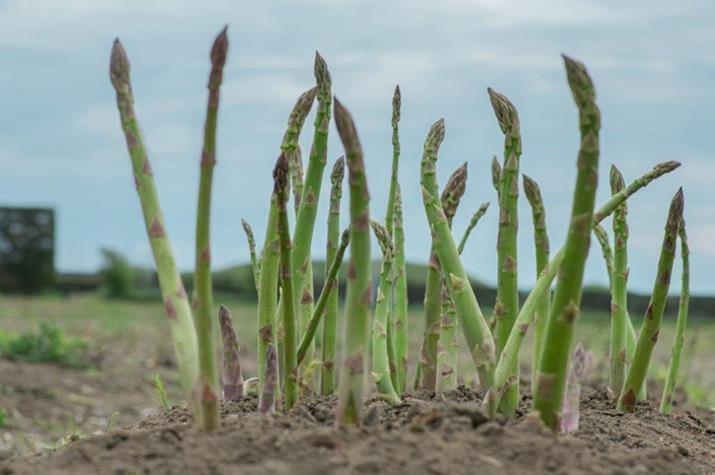
European colonists introduced asparagus to North America in the 1650s, but commercial production did not begin in earnest until roughly 200 years later.
Fast forward to now and the bulk of domestic asparagus farming happens in Michigan. Farmers in the state annually plant, tend and harvest about 9,500 acres of purplish-green fresh spears each year, and the crops are planted, tended in relatively small plots and harvested, all by hand.
State of Michigan’s asparagus industry today
Two sources Vegetable Growers News spoke with describe the current vibes among Michigan asparagus growers as “cautiously optimistic.”
“I think there is more optimism than pessimism, but there are plenty of concerns, too,” said Nick Nadai, asparagus division manager/apple field rep, Michigan Agricultural Cooperative Marketing Association (MACMA). “The industry has gone through some challenging times up until a year or two ago, so some of the new opportunities we are seeing are promising. But fertilizer has gotten expensive, and asparagus seed has more than doubled in cost. So, while we may gain momentum in the market, we might be losing in some other areas as well — it’s an intricate balancing act.”
Adds Michigan State University Extension’s Ben Werling, who works with asparagus growers throughout Oceana County, where a good chunk of Michigan’s asparagus farming lives. “There are dual pressures. There’s pressure on cost because of increasing labor costs, and there’s pressure on price from imports,” he said. “When I started in this role, returns for farmers were higher and costs were lower. That’s basically flipped.”
Jaime Clover Adams says her data shows a two-and-a-half week spike in asparagus imports that coincided with the busiest period of the crop’s harvest season in Michigan.
“This combined with slower consumer interest put real pressure on the volumes retailers were willing to take and at what price,” wrote the executive director of Michigan Asparagus in an email correspondence with Vegetable Growers News.
She says part of her role in leading the state’s asparagus policy and marketing efforts is to unlock new opportunities for the state’s roughly 120-plus commercial growing operations.
“Things like pet food, supplements, ready to eat meals and refrigerated juices,” Clover Adams said. “Long term, finding new uses could open up new places for asparagus during the part of the season when we harvest our largest volumes.”
Import, labor challenges
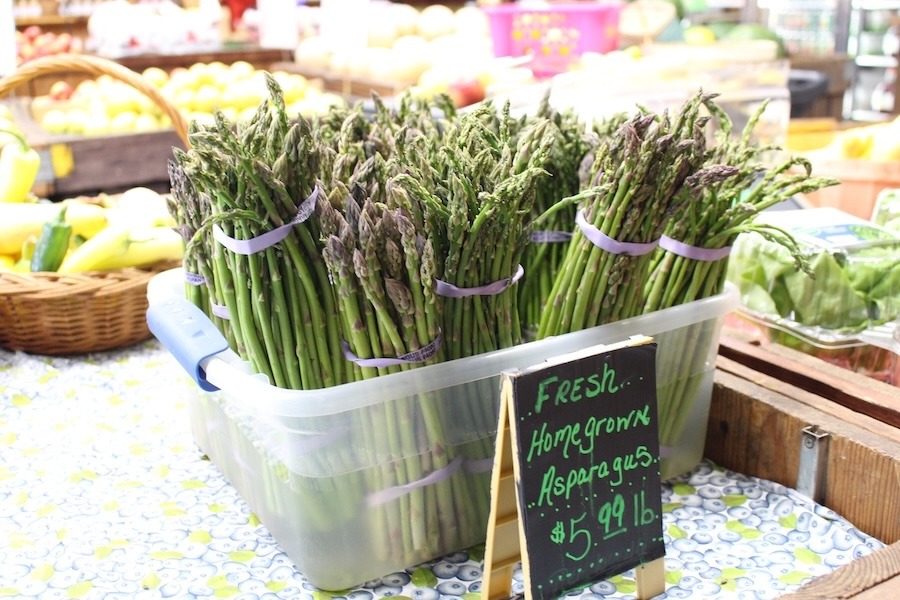
Much of the current import pressure on the crop comes via Mexico and Peru. Werling says it feels like those shipments have been slowing down, and H-2A costs are starting to move in a grower-friendly direction. Both good omens for farmers in his state, who he believes produce a superior crop.
“Our [crops] are larger diameter and have more flavor, too, since it’s not shipped from so far away,” he says. “You can see the difference in the grocery store. South American asparagus is thinner, and it’s one of the most perishable vegetables, so freshness undoubtedly affects quality.”
RELATED – Deeper dive: Michigan farms create 26,400 jobs and $5.39 billion in economic impact
Even so, Nadai says farmers are concerned about imports. USDA data backs up Werling’s assertion that shipments are slowing, but in farming nothing is ever guaranteed. He would caution any grower planting a ton of asparagus based on the current import outlook.
“I think we’ll gradually plant more asparagus, but I hope the market can sustain it when production reaches its peak. That takes about five years,” Werling said. “On the other hand, we might gradually plant more acres only to find out the market disappears before we can capitalize.”
Asparagus, he adds, is unique among vegetable crops because it’s a perennial.
“We can’t just plant a different crop each spring based on what the market needs. Asparagus growers play the long game, they are always looking ahead, but the target moves quickly,” Nadai said.
Clover Adams says one of those moving targets was consumer demand for the fresh, tasty spears.
“The current economy and food inflation impacted consumers this year,” she wrote. “We saw slower movement as people watched their spending. And it seemed that grocers held their prices higher throughout the season than they have in the past. I suspect they were trying to cover their increased costs, especially for transportation.”
As far as labor goes, the asparagus industry in Michigan is “almost entirely dependent on H-2A laborers.” Nadai says, and any potential breakthrough when it comes to mechanization remains far out. Because different sizes of asparagus spears have different end uses – typically longer spears (10 to 11 inches) are sent to the fresh market while shorter ones (6 to 8 inches) are used in processing and anything shorter is left in the field to continue growing – the road to automated harvesting remains daunting.
“The right machine would be a blend of robotics, cameras and sensors,” Nadai said. “Speed is another major hurdle — even if we had the equipment, it would likely be too slow compared to the crews. Some good ideas are circulating but it’s just too cost prohibitive at this point.”
“The challenge in mechanizing asparagus is it’s different from a field of green beans where all the green beans mature at once and you can machine harvest them,” said Werling. “The challenge is how do you pick the spears that are the right length without hurting the shorter ones? People have been trying to develop pickers for the last 100 years, and we have a professor here at MSU who’s working on it, but it’s just not there yet.”
A bright future
Even with several very real threats to grower profitability looming over the segment, Nadai and Werling both feel Michigan’s asparagus industry is in a good spot, all things considered.
“I’m really encouraged about the future, there is a strong presence of younger growers running farms and will be running farms, which can’t always be said in other commodities,” Nadai said. “While the industry has gotten smaller, I think the future is bright in Michigan because of the willingness to work together and adapt, and I’m fortunate to be a part of it.”
“There’s unknowns [in asparagus] just like any crop, but we have really smart growers who know how to produce a good quality crop,” said Werling. “When I first started at MSU, my predecessor would always say ‘you can never count the Michigan asparagus industry out’.”
-by Matthew J. Grassi, managing editor