

UF scientists advance lettuce breeding to combat disease, heat stress
Researchers are developing disease-resistant lettuce to combat heat and crop losses. Learn how new varieties could impact your operation.






Backed by a $500,000 federal grant, the researchers are working to develop disease-resistant lettuce varieties built to withstand shifting weather and growing challenges.
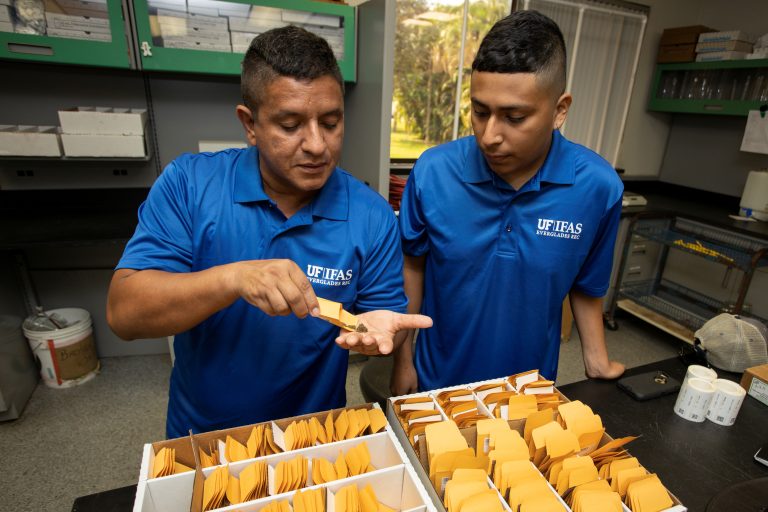
German Sandoya, associate professor, horticultural sciences at UF/IFAS (pictured above left) is leading the effort with funding from USDA’s National Institute of Food and Agriculture (USDA-NIFA).
“This type of research takes time,” said Sandoya. “From the earliest breeding stages to releasing a cultivar, you are looking at seven to eight years. But we are now at the point where we have multiple promising lines and are narrowing them down.”
Florida is the nation’s third largest lettuce-growing state, with the bulk of its crop produced during the winter. Farmers begin planting in early fall and continue through early spring. Harvest season starts in late fall and can run through April or even May.
But Florida’s commercial lettuce crop is increasingly threatened by rising temperatures. At the same time, growers continue to battle bacterial leaf spot, a disease that can severely damage crops.
Using that source, researchers have developed hundreds of advanced breeding lines over several years. Now, with NIFA’s support, the team is moving into large-scale testing.
Trials are planned in Florida, California and Arizona to evaluate how the new lines perform across different climates and production systems, including open fields and greenhouse environments. Researchers are also testing the lettuce in sandy soils common in parts of Florida.
Read the full story by Mederos over at blogs.ifas.ufl.edu.