

Washington State kicks off annual pest, disease survey, targets Japanese beetles
Each year, WSDA surveys for over 130 insects, weeds, and plant pathogens. Learn which pests the department is targeting this year.





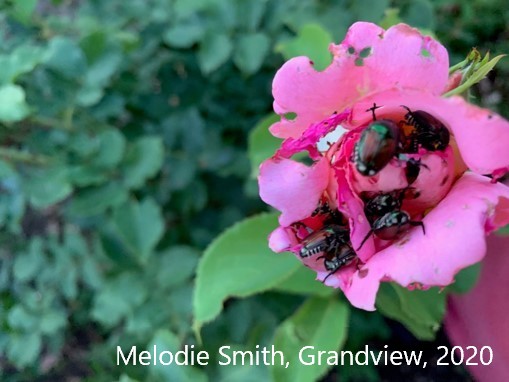
Seasonal staff are starting to disperse throughout the state to set traps as part of the Washington State Department of Agriculture (WSDA) Pest Program’s annual search for invasive species, according to a WSDA news release.
Each year, WSDA says it surveys the state for over 130 insects, weeds and plant pathogens. While some of these pests, such as spongy moth, have been found in the state, most of these pests have not yet been found in Washington but could threaten agriculture or the environment should they establish here.
Top among the department’s pest priorities this year is Japanese beetle. WSDA has been engaging in a Japanese beetle eradication project in South Central Washington since 2022, after extensive trapping efforts in 2021 found almost 24,000 beetles in Grandview and the surrounding area. WSDA saw a decline in beetle detections in 2023, but the numbers rebounded to almost 25,000 in 2024 and climbed to over 70,000 in 2025. Beetles were found in Grandview, Sunnyside, Mabton, Wapato, Pasco, Kennewick, and near SeaTac.
Although beetle trapping is underway, WSDA is still applying a reduced-risk insecticide to properties in the treatment areas that opt in. “Property owners in the treatment area can still sign up for free treatments. If your property isn’t treated, it becomes a potential breeding ground for beetles in your neighborhood,” Sven Spichiger, Pest Program manager, said. “Our only hope of eradicating this beetle is for people in treatment areas to give consent and sign up for treatments.”
The Pest Program is also conducting high-density trapping for spongy moths near Lake Youngs and Lakewood, where WSDA conducted spongy moth treatments last month, in addition to its usual survey efforts.
“Residents in areas where we treated for spongy moths this year can expect to see lots of traps in their neighborhoods this summer, which help confirm that the spongy moth treatments were successful,” Spichiger said. “Whether in a treatment area or part of our statewide detection effort, every trap is critical to our ability to accurately detect spongy moths. If you see a trap, please don’t disturb it.”
Spongy moth and Japanese beetle are just two of the pests that WSDA’s Pest Program monitors for every year. Other major pests WSDA will be looking for this year include apple maggots, grape and stone fruit pests, wood-boring insects, spotted lanternfly and yellow-legged hornets.