







Apr 30, 2020Predatory mite used to control spider mite in tomatoes
The predatory mite Phytoseiulus-System is an effective control for spider mite. In tomato crops, as the pest is more persistent than ever, growers are increasingly opting for biological solutions, said Biobest advisor Nick Nagels.
While the range of chemical actives against spider mite (Tetranychus urticae) is becoming increasingly limited, the pest is increasingly developing resistance to those remaining. Interest in, and adoption of, biological solutions therefore continues to grow. Now that temperatures are rising, red spider mites (two-spotted mite) – can develop rapidly in greenhouses.
Voracious predatory mite
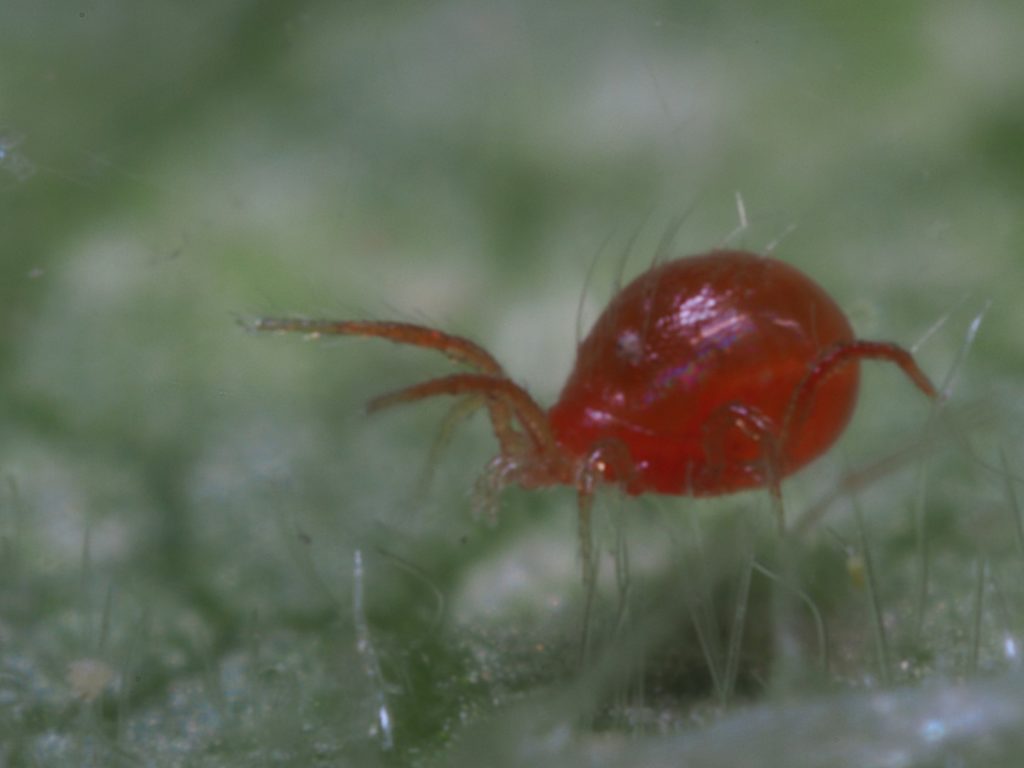
“The predatory mite Phytoseiulus persimilis has proven its effectiveness at controlling spider mite in various crops, including tomatoes. A voracious predator, it develops and spreads quickly eating all stages of red spider mite. A single predatory mite can eat around 20 eggs, 13 protonymphs or five adult spider mites per day. As a result, the predator population grows faster than that of the spider mite. An important condition for good predator development is a high Relative Humidity (RH), about 70%.”
Sprinkle at spider mite hot spots
According to Nagels, the Phytoseiulus-System should be released as soon as possible after the first spider mites are observed in the greenhouse. “Don’t delay ordering, particularly this season as the delivery time could be increased due to the corona crisis,” he warns. “It is therefore particularly important to regularly scout to spot early signs of the pest.
“We recommend releasing the predatory mites in the pest hot spot, as well as surrounding plants. Due to the predator’s rapid development and healthy appetite, spider mite hot spots can be controlled quickly. Growers should repeat the treatment once or several times as necessary.”
Consult your advisor
If the pest pressure becomes too high, some growers still opt for chemical treatments. “We advise customers to contact their advisor before spraying, as some chemical products can have side effects impacting on IPM programs in the greenhouse,” Nagels said.
For more on Biobest, visit here.
Phytoseiulus persimilis adult. Photo Biobest