

Growers share strategies for building profitable asparagus production
Growers explain how asparagus supports spring cash flow while reducing tillage needs. Discover production insights and understand labor priorities.





Key takeaways
- Yakama Nation Farms considers asparagus a foundational crop that sets the tone for the growing season.
- Perennial production helps reduce soil disturbance and recurring field preparation.
- Shared Legacy Farms relies on cover crops and organic fertility to establish asparagus beds.
- Hand harvesting remains important for maintaining product quality.
- Labor availability and climate variability continue to influence production decisions.
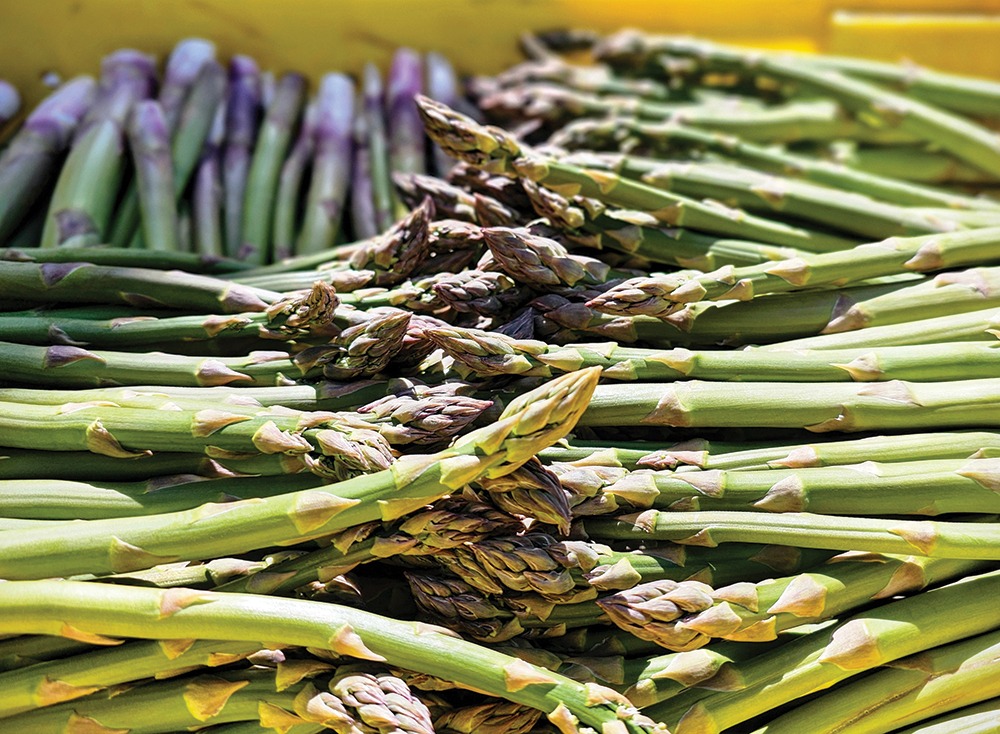
Asparagus is an early season powerhouse that sits in the sweet spot between last winter’s offerings and summer annuals still weeks away from planting.
Jonalee Squeochs, interim general manager of Yakama Nation Farms, said the tried-and-trusted perennial also functions for many growers as a warmup crop for the upcoming growing season.
“It’s like every sports team going through preseason to get the rust knocked off,” Squeochs said. “The big thing for us is to have everything prepared and to make sure our staff is ready to go. Asparagus gives us the ability to plant our flag and say, ‘This is the level of success we’re looking for across the board.’ We’ve done asparagus well historically, and that’s something we don’t want to fumble.”
Dropping anchor in Yakima
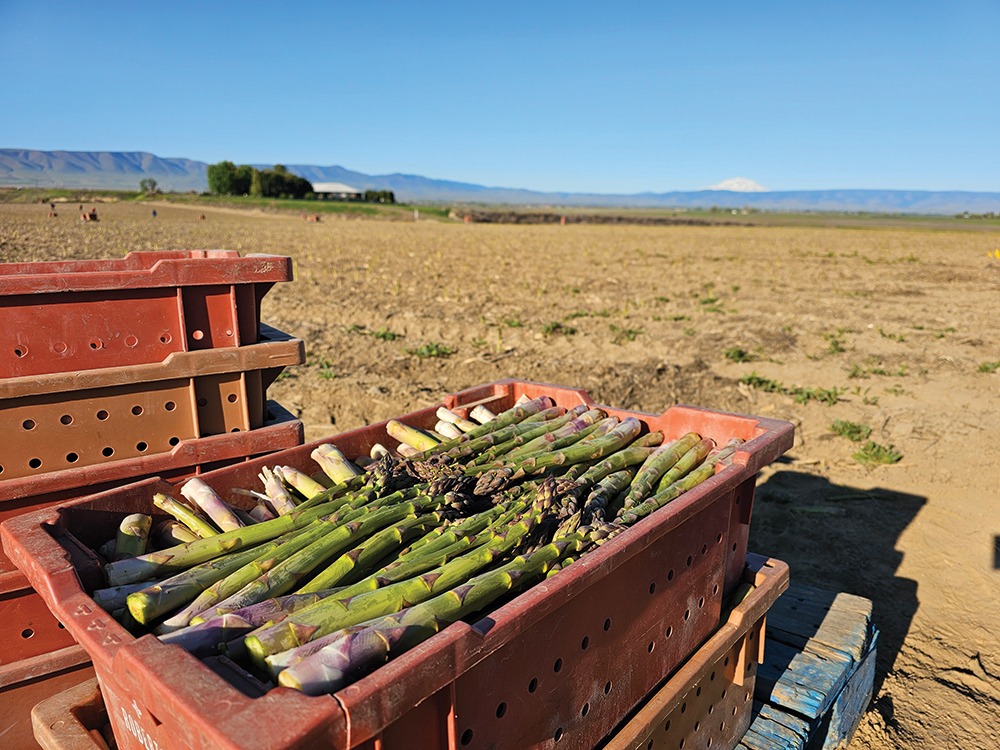
A 1,500-acre farm in Washington’s Yakima Valley, Yakama Nation grows asparagus, cabbage, chards, corn, cucumber, grapes and kale, along with multiple varieties of melon, onions, peppers, pumpkin, squash, tomato and zucchini.
Asparagus remains an anchor crop for the enterprise, which successfully transitioned from a Japanese-operated farm into a tribal business in 2022. Though rising production costs have pushed organic cultivation out of reach, asparagus remains a financial lifeline even in the current times of heavy input spending, Squeochs said.
“I love it because it’s a perennial crop, and we don’t have to disturb the soil or incur extra overhead from resource management,” she said. “I grew up as an asparagus fan, so I’m fortunate with the access we have to it now.”
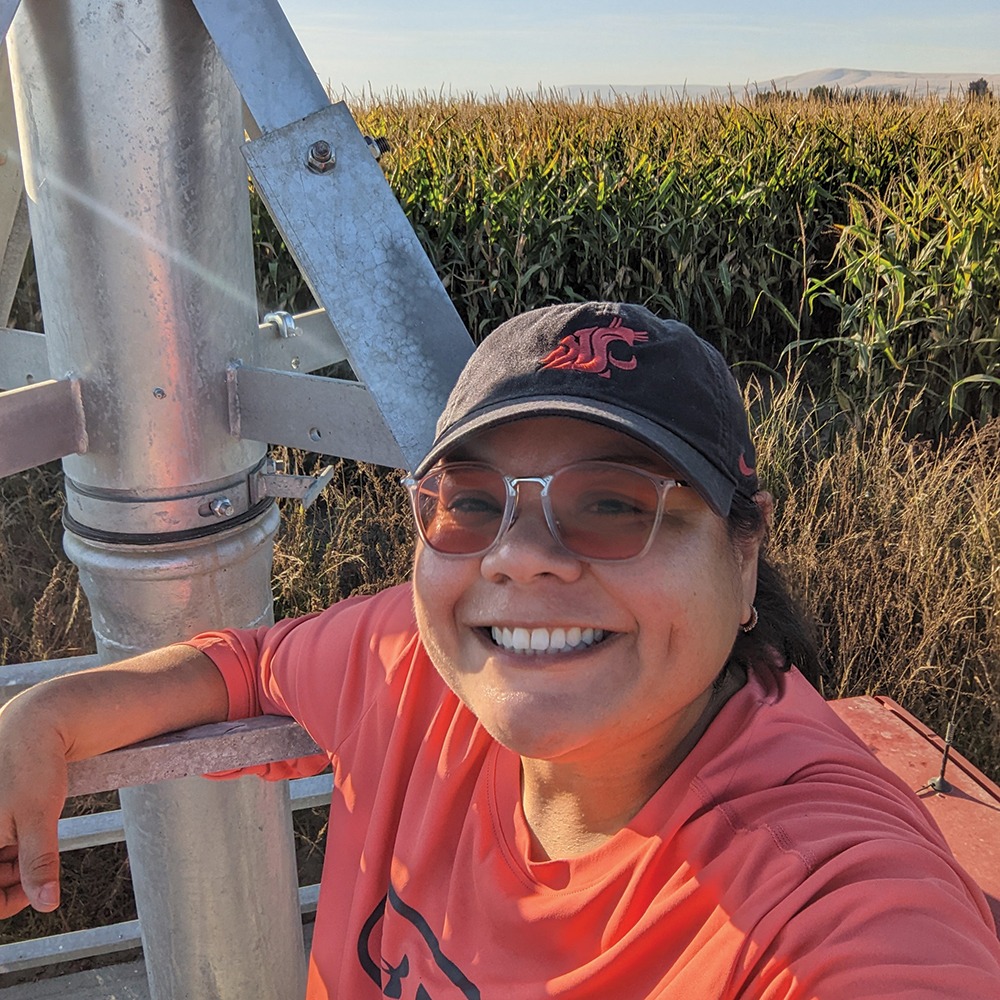
As asparagus can stay in the ground for years, Squeochs doesn’t worry about damaging soil through constant tilling. She also utilizes subsurface drip irrigation in spring, then switches to overhead sprinklers during the hotter, drier weather — which she believes is exacerbated by climate change.
Yet, a robust regional soil profile — powered by ancient glacial runoff and other factors — makes a traditionally low-maintenance crop even easier to nurture, Squeochs said.
“We just mow and get the soil prepared,” Squeochs said. “We don’t do deep tillage because of the irrigation install. It’s more of a shallow till, and we compost every year as well.”
Even as inflation drives up labor costs, Squeochs is committed to keeping a human element at the heart of her operation. It takes a team of highly trained growers to raise an asparagus crop so flavorful it carries a distinct, natural sweetness, she said.
“Our asparagus is picked by hand, and packed by hand. That level of perfection cannot be replicated by a machine,” Squeochs said. “Our customers are very attuned with wanting to know where their food comes from. Our grocery stores and distributors have done a great job tying the farmer with the product, whether it comes from down the road or across the mountain.”
Low-maintenance mainstay

Shared Legacy Farms is the third-generation domain of Kurt and Corinna Bench. The 15-acre organic vegetable farm southeast of Toledo, Ohio, grows a variety of brassicas, including bok choy, cabbage and collard greens. Established as an organic grower in 2016, the farm also serves 400 members annually in its Community Supported Agriculture program.
Kurt Bench grew up on a traditional farm, raising tomatoes, sugar beets, cucumbers and grain crops for roadside sale and at retail garden centers. Inspired by The Omnivore’s Dilemma, Michael Pollan’s seminal text on sustainable agriculture, Bench aims to flip a culture that he believes has forgotten the meaning of “real food,” he said.
“I realized how messed up our food system is, and I didn’t want any part of pesticides,” Bench said. “Now we’re raising 15 acres of vegetables and the rest is cover crops where we’re feeding the soil. It was hard during the first five years because we didn’t have enough acreage. But by year 10 or 12, we had good rotation knowledge and knew what cover crops would fit.”
Along with brassicas, the Benches raise organic asparagus as a perennial early planting. The couple began growing asparagus in 2021, protecting their young crowns with a cover of daikon radishes, then sowing buckwheat and applying organic fertilizer across the entire bed.
“Rototiller, irrigate, and we’re good for the summer,” Bench said. “Radishes work well (as a cover crop) because they help with inner row weeds. I love it, because it’s a perennial system and I’m not worrying about it every month of the summer. I’m simple with this, so our biggest innovation is cover-cropping.”
Labor + weather watchouts
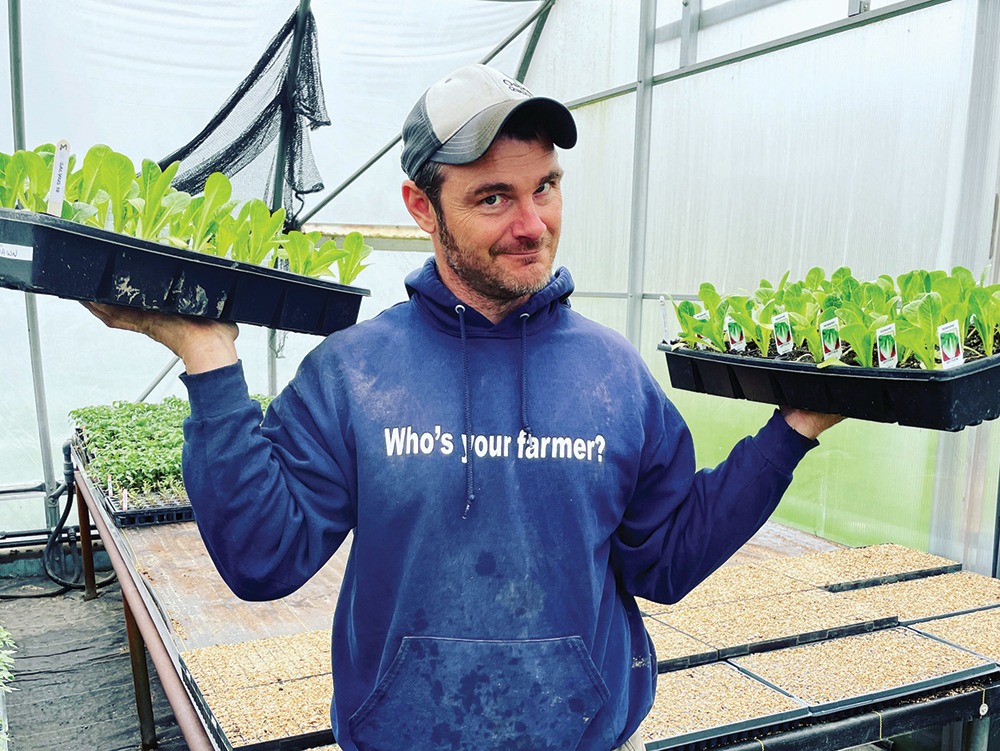
On the labor side, Bench began tapping into H-2A labor following a mid-season worker exodus a few years back, he said.
“Now we have good workers coming back every year who know the rhythm of the farm and know the equipment,” Bench said. “We have local folks in the rotation as well, but we have four main (H-2A) guys who like to make farming fun. It’s nice to just delegate work and not have to babysit. When you have good people, it makes life so much easier.”
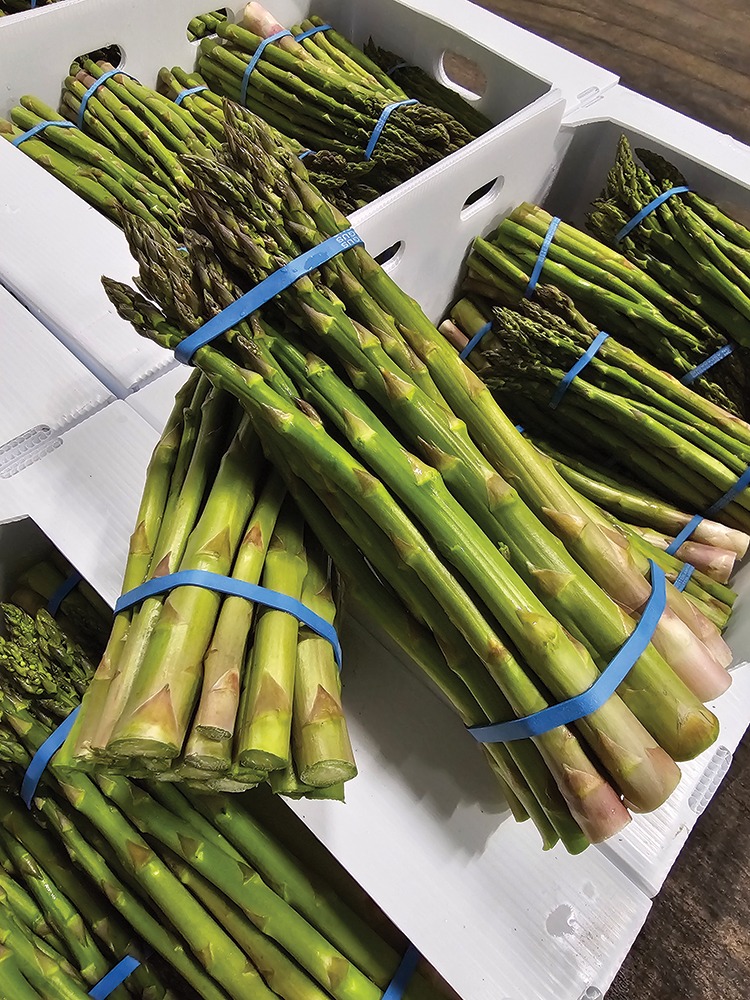
Given the looming threat of a super El Niño on top of broader climate concerns, Bench is grateful to have a dependable team on hand. A foundational cash crop like asparagus is a life-saver for the spring months, he said.
“You are just trying to find the right crops that fit system-wise, or don’t need an extra machine or another two people to grow,” Bench said. “Having income from asparagus in the first half of the season is a huge plus, and because it’s a perennial system there’s not too many inputs.”
Faced with escalating operational costs and a changing climate, Squeochs of Yakama Nation Farms said that producers must redefine what agriculture will look like over the next decade. In the years ahead, asparagus can remain a go-to crop that helps kickstart the growing season, she said.
“Because it’s the first crop of the year, asparagus is something we can always be excited about,” Squeochs said. “It might be a cliché, but it’s grown with a good heart and that’s always going to be our cultural focus.”
FAQs
Why do growers value asparagus?
It provides dependable early-season income and serves as a spring anchor crop.
How long can asparagus remain productive?
The article notes that asparagus can remain in the ground for years.
How does Shared Legacy Farms manage asparagus?
The farm uses daikon radishes, buckwheat and organic fertilizer while relying on cover cropping.
Why is asparagus harvested by hand?
Yakama Nation Farms says hand harvesting helps achieve a level of quality not replicated by machines.
Douglas J. Guth is a Cleveland-based freelance journalist with 20-plus years of experience in journalism, content production and freelance writing. He writes about agriculture for industry-focused publishers.