

Agrivoltaics in action: Iowa State research uncovers best crops for solar
New data shows yield gains for select vegetable crops grown in solar installations. Learn more about this cutting-edge production system.





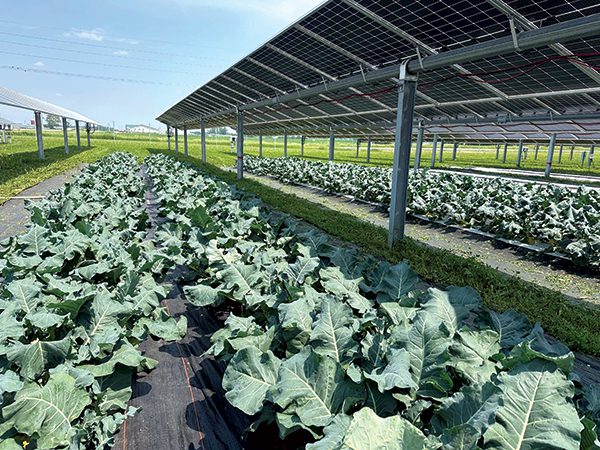
Humans have cultivated food crops for centuries, and solar generation has been around since the mid-1950s, yet the act of producing both commodities on the same acre is a relatively new concept.
Wanting to learn more about growing crops and generating power in a single, commercially viable system, a team of Iowa State University researchers led by horticulture professor Ajay Nair launched an agrivoltaics research project two years ago at a 10-acre research plot outside Ames, Iowa.
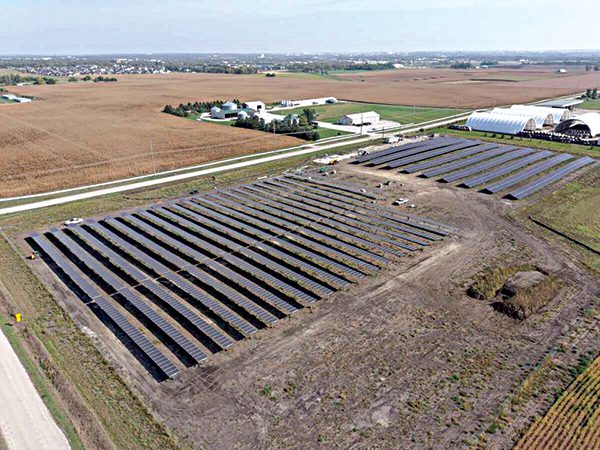
Nair and his team worked with regional utility company Alliant Energy to install and connect four plots of solar panels to the power grid. The project utilized two panel types — shorter, south-facing fixed panels and taller panels that can move on a fixed axis to track the sun.
Between the panels, the researchers tilled to reduce soil compaction and installed black landscape fabric and plastic mulch to keep weed pressure down between rows.
Nair said one of the most important things his team learned is the need for a clear, written agreement signed by all parties – farmer, utility company and any ag service providers involved. The agreement should define who can access the site and when, and who is responsible for spraying, fertilizing and harvesting the crops as well as collecting plant health and yield data.
“You can grow broccoli, you can grow squash and you can grow peppers on a commercial scale without any compromise on yield or quality. There is no problem growing high-quality food crops within an agrivoltaics system.” – Ajay Nair, Iowa State University
Nair also said growers need to keep in mind that the power generated from the panels drives revenue in most agrivoltaics systems — not the crops.
“It’s like a burger — the meat in the burger in this case is the electricity, and the food crops are the little sesame seeds on the bun,” he said. “The crops are not the main draw, but they are there to enhance the overall product.”
Which crops performed best?
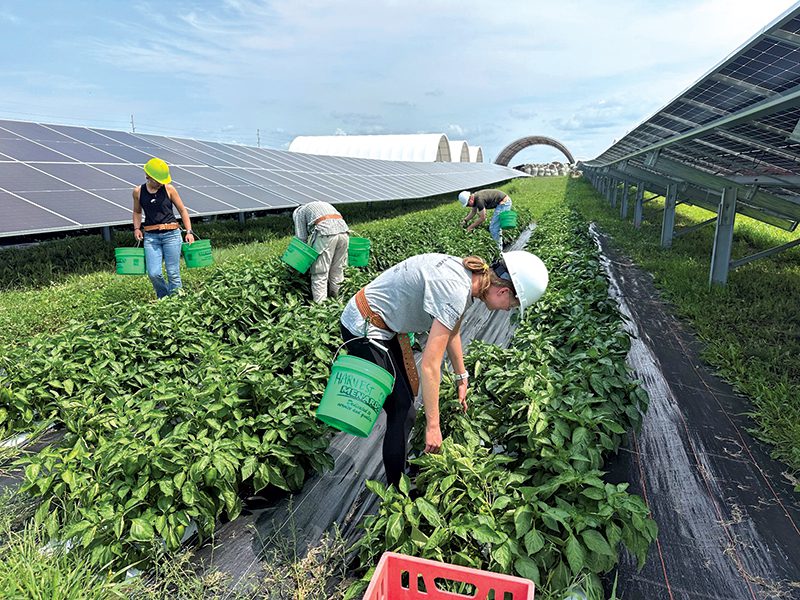
Nair and his team found squash, peppers, tomatoes, broccoli and raspberries showed good yield and quality in the ISU research plot. Strawberries, he said, did not work in the system.
“You can grow broccoli, you can grow squash and you can grow peppers on a commercial scale without any compromise on yield or quality,” Nair said. “There is no problem growing high-quality food crops within an agrivoltaics system.”
Specifically, Nair and his team saw squash yields increase nearly 20% versus an open-field setting. And pepper plants were notably larger and taller with thicker stems to support higher fruiting yields compared to open-field plants. Broccoli showed similar results — taller plants and more voluminous growth on average — than the same varieties grown in open fields.
What about drawbacks?
One tradeoff is that while yields and plant size increase in the solar field-grown broccoli crops, the system produced slightly less marketable finished produce. Nair also said that the crop rows planted closest to the panels had slightly lower yields than crop rows further away, which he attributed to higher shade levels.
Nair also noted as the vegetable crops grew, they began to absorb more sun and water while releasing humidity and C02, which slightly diminished the amount of power generated by the undersides of the bifacial panels.
Animal pests are another consideration. Nair and his team initially had concerns, as research students working in the solar fields noted more sightings of robin nests and eggs versus open-field plantings. But crop damage was minimal and the fledglings largely left the developing crops alone.
“Probably the biggest thing I learned was the amount of space [available for growing crops] between panels — there’s about 21 feet between the rows,” Nair said. “There’s a misconception that these panels are stacked on top of each other, but that’s not the case.”
Grower checklist: Is agrivoltaics right for your farm?
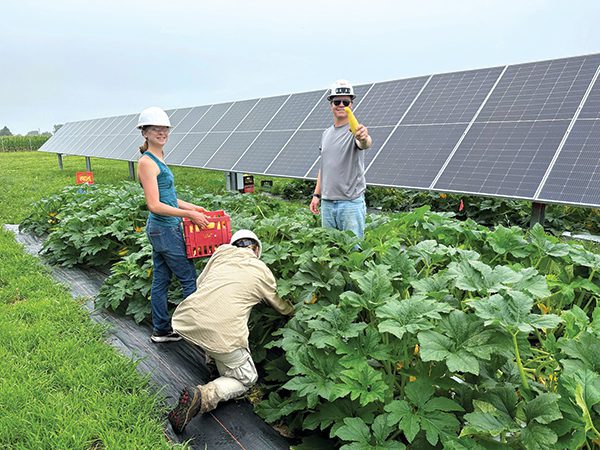
- Check crop fit: Peppers, broccoli, squash and some small fruit crops performed equal or better under partial shade compared to open-field plantings.
- Evaluate your microclimate needs: Solar panels can reduce crop stress, conserve soil moisture and moderate daily light integral. Researchers also believe panels may improve quality and consistency during hot summers.
- Confirm equipment access: Standard specialty crop tractors (under 100
hp), plastic mulch layers and tillage equipment operate at commercial scale; there are no specialty tools required. Nair said to think carefully about irrigation (what type, and who will manage?) and site drainage (is it sufficient?) during the planning phase. - Run the numbers: Account for dual income streams: crop sales plus land lease or energy revenue. Early data from the ISU project also shows reduced labor hours and lower input costs.
- Plan layout early: Row spacing, panel height and daily site access matter. Coordinate agreements with all landowners, stakeholders and utility providers before planting.