

Ellijay Mushrooms: Growing community in North Georgia’s hill country
From IT to chief mushroom officer, Howard Beck and his team are making magic and shaping lives. Read on for Ellijay’s origin story.





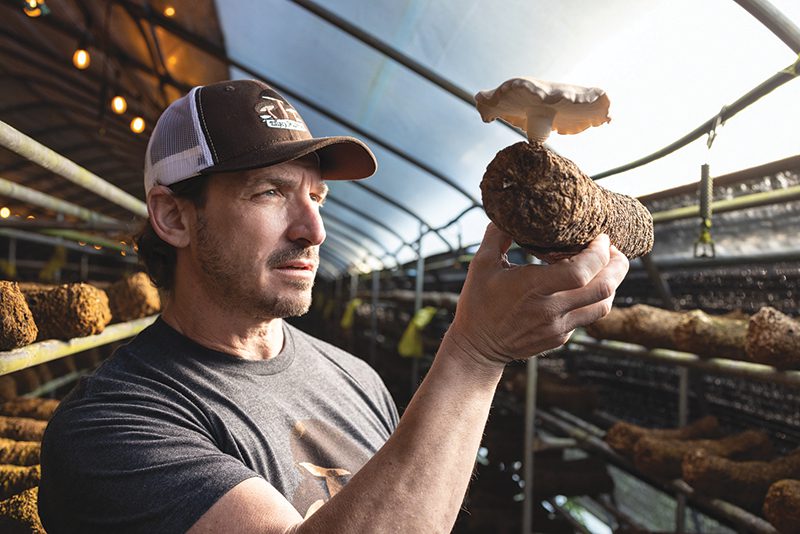
Howard Berk still remembers the first time mushrooms caught his attention — not as a crop, but as a curiosity.
Growing up in Ohio, he spent most of his childhood outdoors, roaming the woods with friends, chasing grasshoppers, jumping off train trestles and stumbling across clusters of mushrooms pushing through the forest floor. With no internet to consult, Berk and his friends relied on library books to identify what they were seeing, learning early which mushrooms were edible and which were best admired from a distance.
That mix of curiosity, self-education and time spent in nature planted a seed that would take decades to fully sprout.
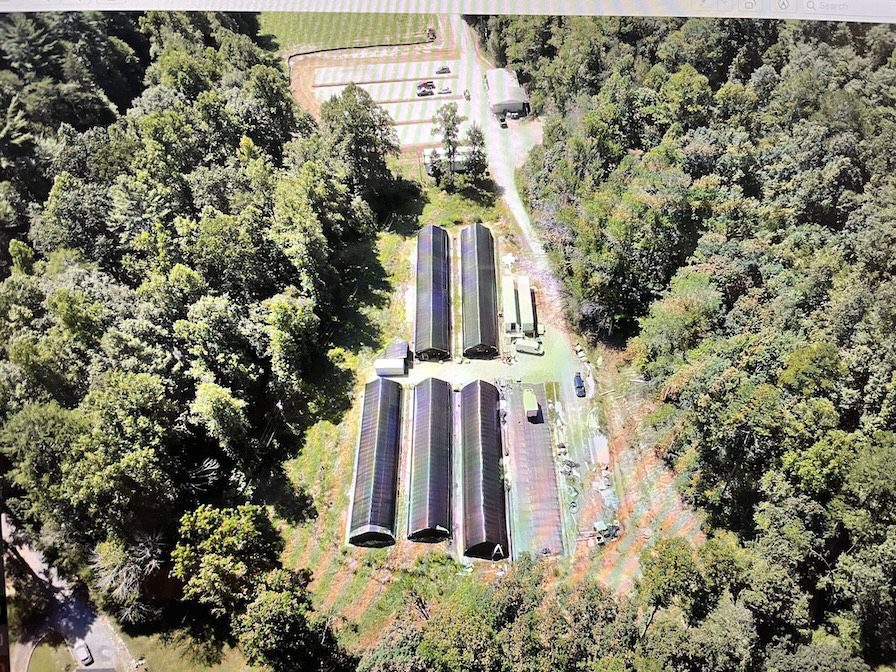
Today, Berk is the co-founder and “chief mushroom officer” of Ellijay Mushrooms, a certified organic farm tucked into the mountains of Gilmer County, Georgia. What began with two 120-foot greenhouses has grown into an 11-greenhouse operation harvesting thousands of pounds of mushrooms weekly, supplying grocery stores, distributors and more than 50 restaurants across North Georgia and Atlanta.
Along the way, Ellijay Mushrooms has become something more than a farm. It’s a community hub, an agritourism destination and a case study in how small-scale agriculture can drive local economic opportunity.
From IT to the forest floor
Before mushrooms became his livelihood, Berk spent 17 years working in IT. Even then, mushrooms remained a constant presence in his life. Through college and into adulthood, he gravitated toward them for their flavor, nutritional benefits and health properties, eventually weaving them into his own wellness journey.
A turning point came around 2011, when Berk helped start a farmers market in Chamblee, Georgia. There, he met his first business partner and co-founded a company called 2FunGuys — a nod to both humor and fungi. The business focused on mushroom log kits for home gardeners: cut a tree, inoculate it with mushroom spawn and let nature do the rest. Berk still operates that first real foray into mushroom entrepreneurship today.
Several years later, sisters Megan and Amanda approached Berk with a new idea: starting a commercial mushroom farm in Ellijay. The goal was ambitious, feed people more intentionally while bringing fresh, high-quality mushrooms to grocery stores and restaurants throughout the Southeast. Ellijay Mushrooms was born soon after.
Bootstrapping growth in the mountains
Scaling a mushroom farm in rural North Georgia came with its share of challenges. Berk describes the early years simply as “grinding.” Convincing institutional buyers to return emails or take phone calls was — and still is — one of the toughest hurdles. But, once buyers see the product in person, the conversation often shift.
“Mushrooms are about 90% water,” Berk said, noting that quality comes down to freshness and growing conditions. “When people see the mushrooms, they see the difference.”
Growth was also shaped by infrastructure limitations. The farm does not have access to three-phase power, meaning all equipment must run on single-phase systems. Without deep institutional funding, the team bootstrapped expansion piece by piece. Even today, Ellijay Mushrooms’ 100% recyclable clamshell packaging is folded by hand.
But Berk believes differentiation — both in product and philosophy — has been key.
“We always ask buyers if they’re selling on our story,” he said. “Because our story is real.”
That story includes job creation in a county with limited economic options beyond poultry houses and seasonal tourism. Berk set out to create opportunities for people in his community to learn, grow and build careers — whether on the farm, in sales or in leadership roles.
Building a team and a reputation
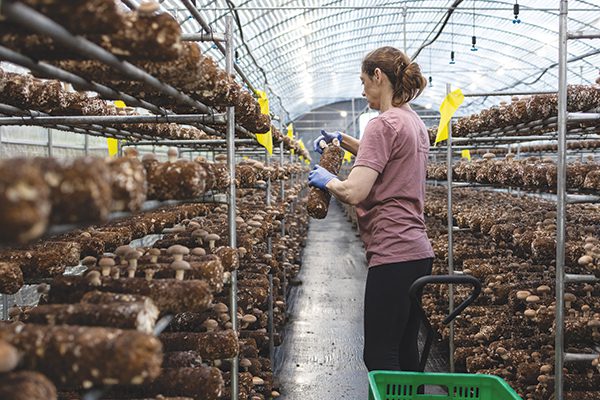
Ellijay Mushrooms now employs around 15 people, with staffing fluctuating between weekdays and weekends. Early on, hiring was difficult. Today, Berk said, the farm’s reputation has changed that.
“There was a time when I’d put a ‘Help Wanted’ sign on the street corner,” he said. “Now people call us.”
Much of the workforce comes from the local Guatemalan community, including graduates of nearby Gilmer High School. The farm works with the school’s agriculture department and hosts 4-H students to show young people where food comes from and what careers in agriculture can look like.
Berk shared the story of Israel Bautista, one of the farm’s first employees who eventually became farm manager. Over time, Baptiste and his family were able to purchase and renovate a home, building significant equity.
“We could do more of that,” Berk said. “We just have to sell more mushrooms.”
Because mushrooms never stop growing, the operation runs seven days a week. Berk is quick to credit his team for keeping the farm running smoothly.
“If we didn’t have this amazing team, we’d be back to square one.”
How the mushrooms grow
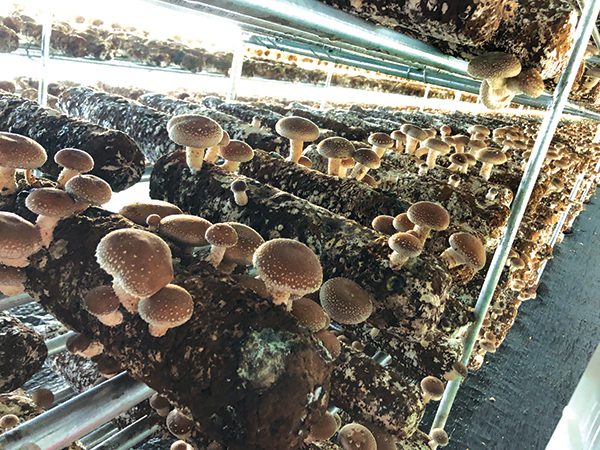
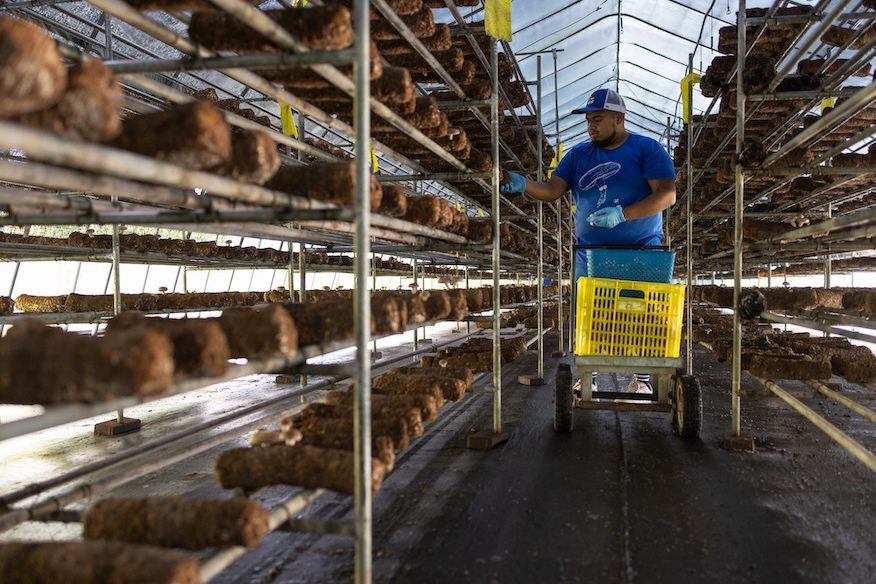
Despite being a farm, Ellijay Mushrooms doesn’t grow in soil. Instead, shiitake mushrooms are cultivated on logs made from hardwood sawdust inoculated with mycelium — the same white fungal network visible under forest leaf litter or inside decaying trees.
“Mushrooms are decomposers,” Berk explained. “They’re nature’s recyclers.”
Once the environmental conditions are set, the logs are soaked to absorb moisture and placed in greenhouses. In about 14 days, mushrooms are ready to harvest. Each log produces multiple flushes before eventually breaking down.
The farm currently produces roughly 5,000 pounds of shiitake mushrooms and up to 1,500 pounds of oyster mushrooms per week, depending on conditions. Cold weather can slow production, especially since the greenhouses aren’t fully insulated — an ongoing challenge during winter months.
Fresh first, value-added second
About 70% of Ellijay Mushrooms’ sales are wholesale, with the remaining 30% coming from retail and direct-to-consumer channels. The farm supplies Whole Foods, regional distributors and approximately 55 restaurants, many served directly through in-house deliveries.
Berk takes a hands-on approach with chefs, focusing on next-day harvested mushrooms that last longer in refrigerators and reduce waste — an important consideration in an industry with razor-thin margins. Tastings, events with chefs, and menu collaborations have helped build momentum one relationship at a time.
That same emphasis on minimizing waste led to the farm’s growing line of value-added products. If mushrooms are at risk of spoiling due to canceled orders or unexpected overproduction, they’re dehydrated and repurposed into products such as mushroom coffees, dried blends and tinctures.
Ellijay Mushrooms operates with less than 1% waste, a point of pride that earned the farm a Slow Food Snail of Approval Award. Spent mushroom logs are composted and reused by local gardeners, vineyards and the farm’s own pollinator garden.
Value-added products also create new revenue streams and jobs, particularly in drying, processing and packaging. Berk sees this side of the business as essential for long-term stability — and as a pathway to future CPG products on grocery shelves.
A destination, not just a farm
Agritourism has become another pillar of the operation. Georgia’s agritourism program provides signage and promotion, helping draw visitors to the farm. Ellijay Mushrooms has been featured twice on Fork in the Road, a state-supported series highlighting local farms.
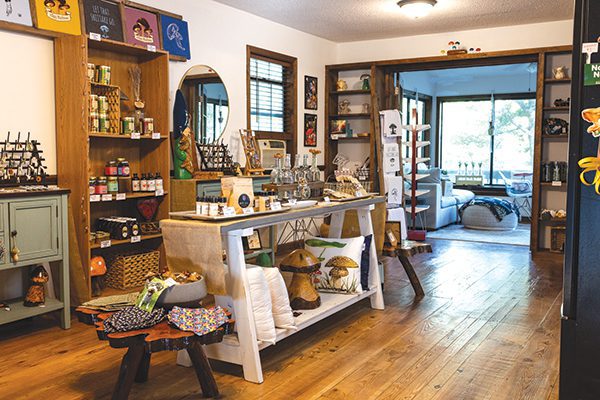
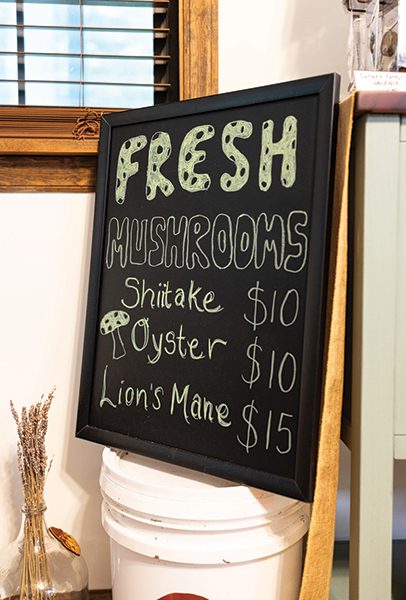
The on-site farm store is now open seven days a week — a far cry from the early days when visitors rang a doorbell and waited for someone to come down from the greenhouses. Today, tour buses, wine tours and vintage shopping groups regularly stop by. Visitors can explore the greenhouses, pick flowers, stroll through the pollinator garden and learn how mushrooms are grown.
Looking ahead, Berk plans to add QR-code-guided tours and more grab-and-go meal options, encouraging families to linger and connect with the land.
As Ellijay Mushrooms continues to grow, Berk remains grounded in a simple philosophy.
“We don’t need the whole pie,” he said. “We want to share the whole pie with our team and our community.”
A graduate of the University of Miami, Keith Loria is an award-winning journalist who has been writing for almost 20 years. View his recent writing at keithloria.contently.com.