

Melon Production Management Research Boosts Watermelon Yields and Disease Resistance
Learn how UGA advances melon production management with seedless watermelon trials, spacing studies, and disease resistance strategies.





Watermelon Variety Trials in Georgia

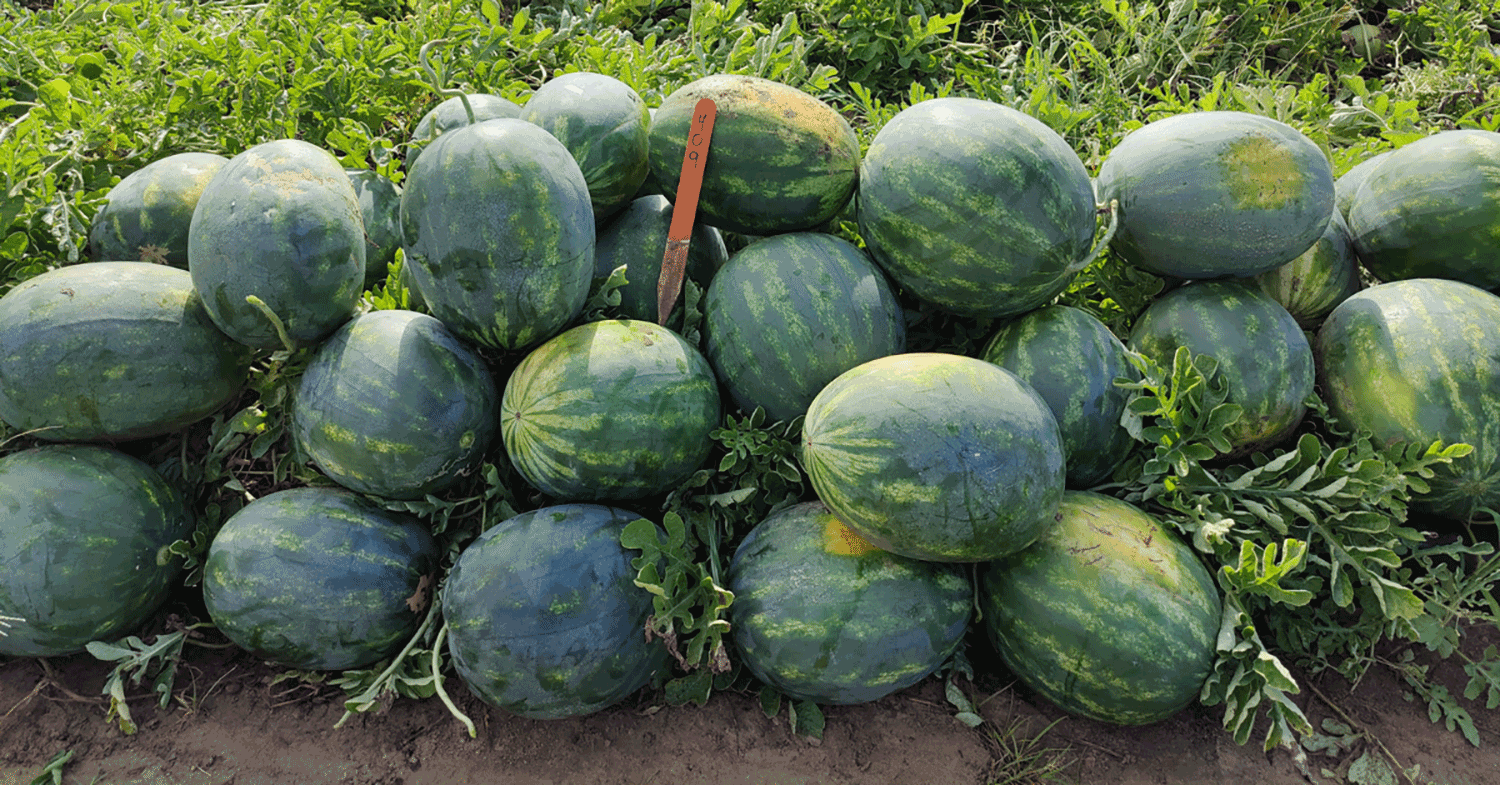
Breeders are producing better watermelon varieties that aren’t seeded, too large or light skinned and possess characteristics other than disease resistance. Photos courtesy of Ted McAvoy.
Since 2021, Ted McAvoy, assistant professor of horticulture and vegetable Extension specialist, has studied large and mini seedless watermelons in variety trials at UGA’s Tifton campus. His research focuses on yield, size distribution, defects, and anthracnose disease resistance, while also examining plant spacing for grafted watermelons.
Historically, one seed company dominated the watermelon market, but as that company shifted to direct sales, distributors needed reliable trial data. McAvoy’s results confirm that many seed companies now offer competitive varieties.
For large watermelons, he recommends Excursion, Sierra Nevada, and El Capitan (30- to 36-count sizes). For smaller melons, Miramonte and Jet Ski (45- to 60-count sizes) have shown consistent performance.
Disease Resistance Challenges
Anthracnose remains a major concern for Georgia watermelon growers, particularly as resistance to Quadris fungicide increases. A USDA-funded project involving researchers in Florida, Georgia, South Carolina, and New York is exploring fungicide screenings, variety susceptibility, and irrigation practices for anthracnose management.Beyond anthracnose, Georgia growers contend with gummy stem blight, phytophthora, and downy mildew later in the season when rains arrive. Early in spring, disease pressure is typically low, requiring minimal fungicide inputs.
Grafted Watermelon Spacing

Ted McAvoy’s University of Georgia crew studies watermelon variety performance as well as grafted watermelon plant spacing at UGA’s Tifton facility.
Because granted watermelons cost four to five times more per plant than non-grafted plants, McAvoy is testing whether wider plant spacing can reduce costs without reducing yields.
Preliminary results indicate that wider spacing is feasible, showing no reduction in yield or fruit size. “These are promising preliminary results where it seems like we may be able to reduce plant populations without reducing yields or having an effect on fruit size,” McAvoy said.
Vigorous grafted rootstocks also improve water and nutrient uptake. Plant pathologist Bhabesh Dutta is examining fusarium wilt control by grafting seedless watermelons onto resistant rootstocks. Carolina Strongback, a citron rootstock, has shown particular promise, outperforming squash rootstocks that are susceptible to root knot nematodes.
Insect and Seasonal Considerations
Compared to Florida, Georgia’s cooler, drier springs reduce early disease pressure. Pests such as aphids, thrips, and squash bugs appear but are typically manageable and show little insecticide resistance. Whiteflies, however, become problematic in fall crops.Advancing Melon Production Management
Researchers emphasize that ongoing studies in spacing, disease resistance, and grafting are helping refine melon production management strategies for George growers.By integrating improved varieties, resistance rootstocks, and adaptive irrigation and fungicide practices, growers can reduce costs and increase efficiency while continuing to meet shifting consumer demands for high-quality seedless watermelons.
– Written by Doug Ohlemeier, Assistant Editor