
Fresh produce powers growth in $80 billion U.S. organic segment
Fresh produce continues to power the organic boom. See which categories — from berries to eggs — are driving the next wave of growth.





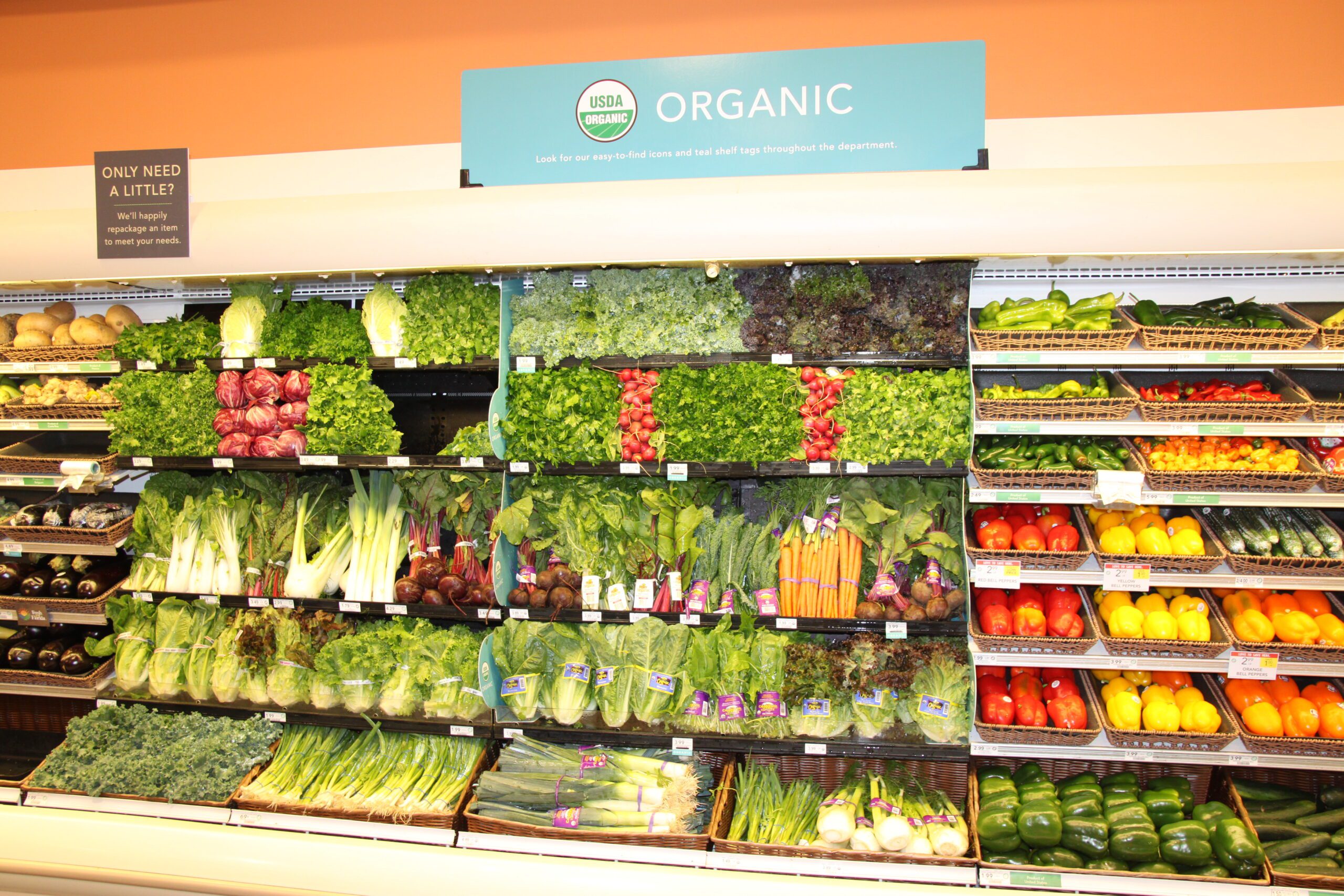
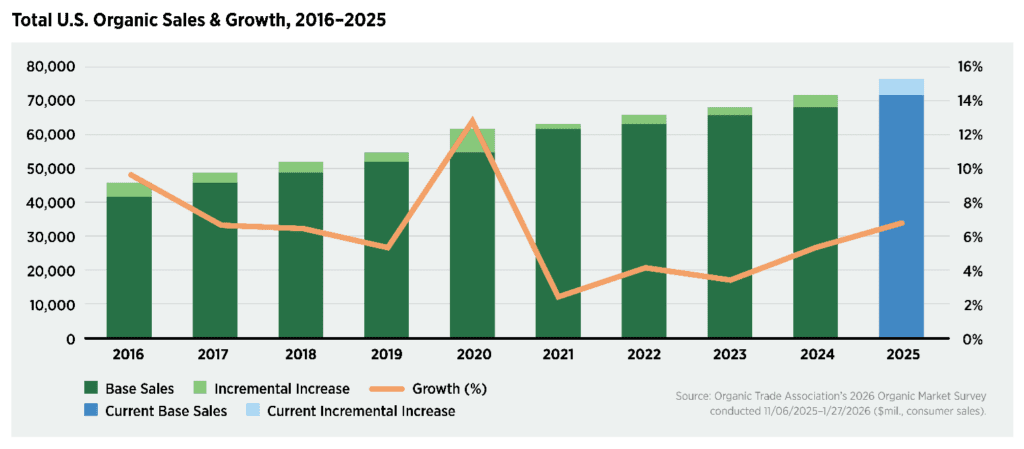
In 2025, organic grew at a fast pace, doubling growth of the total retail marketplace, which grew at 3.4%.
Organic sales were led by fresh produce, which still serves as the primary entry point for organic purchases. Sales of organic non-food products totaled $6.5 billion representing just under 1% of the overall comparable market sales for those categories.
Sales breakdown by product type
At $22.7 billion, organic produce held the top spot, accounting for nearly 30% of total organic sales with a steady growth rate of 5.3% for the year.
Berries remain the leader of the organic produce category with sales rising to $4.4 billion, an increase of 10.5%. Citrus also had a strong year, with sales climbing 18.1%, while bananas experienced double-digit growth at 12.6% to reach the $1 billion mark, according to the OTA.
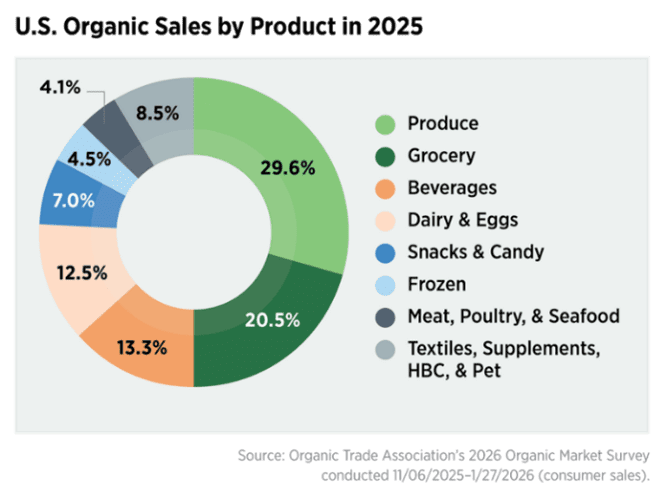
The second highest-selling organic category was grocery, posting sales of $15.7 billion in 2025, achieving a steady 4.2% overall growth rate. Highlights of the year included ongoing growth in organic baby food and formula of 8.8%, now accounting for 11.0% of organic grocery sales. Dried beans, fruits and vegetables grew at a healthy pace of 13.6%, driven by consumer demand for shelf stable products, correlating to consumer desire for healthy plant-based foods, clean eating and overall affordability.
Organic dairy and egg sales grew at a notably strong rate of 12.8% to reach $9.6 billion, a $1.1 billion increase from a year ago. Organic yogurt, the second largest subcategory in this segment, grew 16.6%, driven by the increasing consumer preference for clean, portable protein. Organic yogurt products for babies and kids also saw sales increases. Organic egg sales rose significantly at 22.4%, even as prices remain high due to the long-term impact of the Avian Influenza epidemic that began in 2024.
Organic’s long-term outlook: uncertainty and opportunity
While political and economic conditions remain unpredictable, the organic sector enters the latter half of the decade facing both uncertainty and opportunity built on strong consumer demand, continued regulatory enforcement, ongoing public-private investment, collaboration and advocacy. With these drivers, organic agriculture is well positioned to remain a vital and growing part of the U.S. food system.
The long-term outlook for organic forecasts a compound annual growth rate (CAGR) of 5.6% which has remained consistent since 2016. There are positive indications that strong industry growth will continue with annual organic sales projected to increase another $24 billion over the next five years. Organic is expected to cross the $100 Billion threshold in 2030.