

Fumigation a tool for Georgia watermelon farmers fighting fusarium wilt disease





Fumigation is a method of pest control that involves using volatile compounds in a restricted area to kill pests and pathogens. Research on fumigation with the fungicide Proline is yielding promising results, according to Bhabesh Dutta, UGA Cooperative Extension vegetable pathologist at the UGA Tifton campus.
Though Dutta admits more research is needed, results from last year’s UGA trials show a significant reduction in disease in test fields where fumigated treatments were applied – 4 percent per field – as compared to those fields where the plants were not fumigated — 26 percent per field.
Dutta is collaborating with UGA Extension vegetable specialist Tim Coolong and UGA Extension Agriculture and Natural Resources agents Will Gay in Turner County, Georgia, and Josh Grant in Crisp County, Georgia. The research team plans to continue conducting multilocation field trials on the interactive effect of using both a fumigant and a fungicide to control fusarium wilt.
Over the last four to five years, fusarium wilt emerged as the biggest disease that watermelon farmers face. The limited control options for the disease exacerbate the problem.
Proline’s effectiveness is limited, Dutta said. The plants may look well through midseason, but they quickly decline as temperatures warm up in early June.
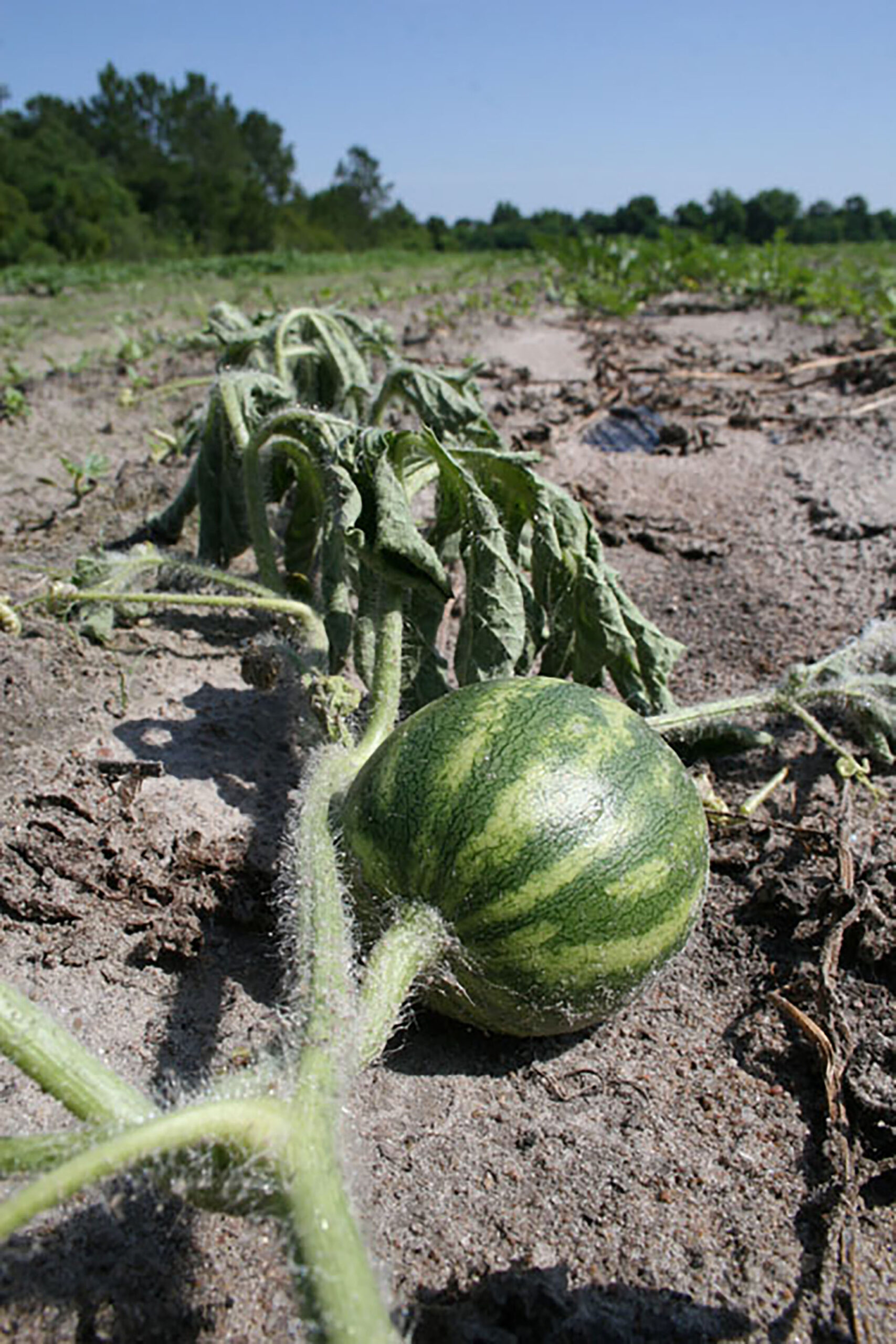
Plants infected with the fusarium wilt pathogen wilt and eventually die if the infection is strong. The plant can produce fruit if the infection is weak, but when it begins using the energy necessary to produce fruit, the plant will likely decline and slowly die, Dutta said.
“The management of fusarium wilt is tricky, as multiple races of the pathogen are present in Georgia. While our watermelon growers are armed with watermelon varieties that are resistant to one race of the disease, there are also other races to which our plants are totally vulnerable. In those cases, the plants are very likely to incur significant, if not total, damage,” Dutta said.
Watermelon plants can become infected in multiple ways. The fusarium wilt pathogen can produce spores that can survive in the soil, and can be seedborne and introduced to fields where watermelons have never been grown.
The 2015 farm gate value for watermelon in Georgia was $124.5 million, according to the UGA Center for Agribusiness and Economic Development.
–Clint Thompson, University of Georgia College of Agricultural and Environmental Sciences
Source: University of Georgia