

Veg Connections: Cellulose mulch shows promise for sustainable agriculture
Cellulose mulch shows promise for sustainable agriculture. Read about the research conducted by Purdue University scientists.





Environmental challenge meets innovation
The agricultural industry’s reliance on plastic mulch has long been a double-edged sword. While plastic mulch has revolutionized farming practices and boosted yields, it leaves behind a troubling legacy of soil contamination through microplastic pollution. These microplastics not only disrupt soil health and biodiversity but also pose potential long-term threats to food safety and human health.The labor-intensive removal process and complex recycling requirements add to the growing concerns about traditional plastic mulch use. Previous attempts at creating biodegradable alternatives using materials including starch, polylactic acid and polyhydroxyalkanoates (groups of biodegradable plastics) have shown limited success, particularly in moisture control and irrigation management.
A new approach to mulching
The newly developed JCM offers a sustainable alternative that addresses these challenges while introducing innovative features. Manufactured through a roll-to-roll slot die coating process, the mulch can be produced in widths ranging from 0.5 to 4 feet, making it suitable for various crop applications. Field tests conducted by Petrus Langenhoven, Yun Zhang and Wenkai Zhu at Purdue University’s Meigs Horticulture Research Farm in Lafayette, Indiana, demonstrated remarkable advantages in several key areas (Image 1).
Image 1. Bell pepper research plot at Purdue’s Meigs Horticulture Research Facility. Plots with yellow lines include the JCM biomulch. Photo courtesy Wenkai Zhu.
In terms of moisture management, JCM enhances soil moisture retention by 32% compared to conventional mulches. Its unique unidirectional water transport system efficiently directs water to the soil, while suppressing evaporation. The technology employs cellulose fibers coated with 5 µm polydimethylsiloxane (PDMS) with an average opening of 100 µm, creating an engineered asymmetric wettability by the hydrophobic fibers and natively hydrophilic cellulose scaffold. Perhaps most impressively, the material can harvest up to 1.59 liters of ambient water per square meter, providing additional moisture to crops without irrigation.
Temperature control and light management are equally impressive. The mulch maintains soil temperatures about 41°F cooler than bare soil during hot summer conditions, while its reflective properties redirect 66.7% of solar radiation, increasing lower canopy photosynthesis by 23%. This is achieved through multiscale fiber networks that possess highly effective scattering centers with 600 nm – 3 µm diameters. These features combine to provide more stable growing conditions throughout the season.
From a practical standpoint, JCM integrates seamlessly into existing farming operations. The material is compatible with conventional mulch deployment equipment. It remains effective for the entire summer growing season and biodegrades more than 90% within 8 months (Image 2). The material can simply be tilled into the ground at the end of the growing season.

Image 2. Cellulose mulch 5, 21, and 23 weeks after transplanting. Notice how the inground part (yellow line) of the mulch has degraded 23 weeks after transplanting. Photo courtesy Petrus Langenhoven.
Real-world performance
In an extensive field trial with bell peppers (var. Flavorburst), JCM demonstrated impressive results when compared against black plastic, white plastic and bare soil conditions. The research design included the three treatments with eight repetitions each, plus a bare soil control group with sixteen repetitions (Image 3).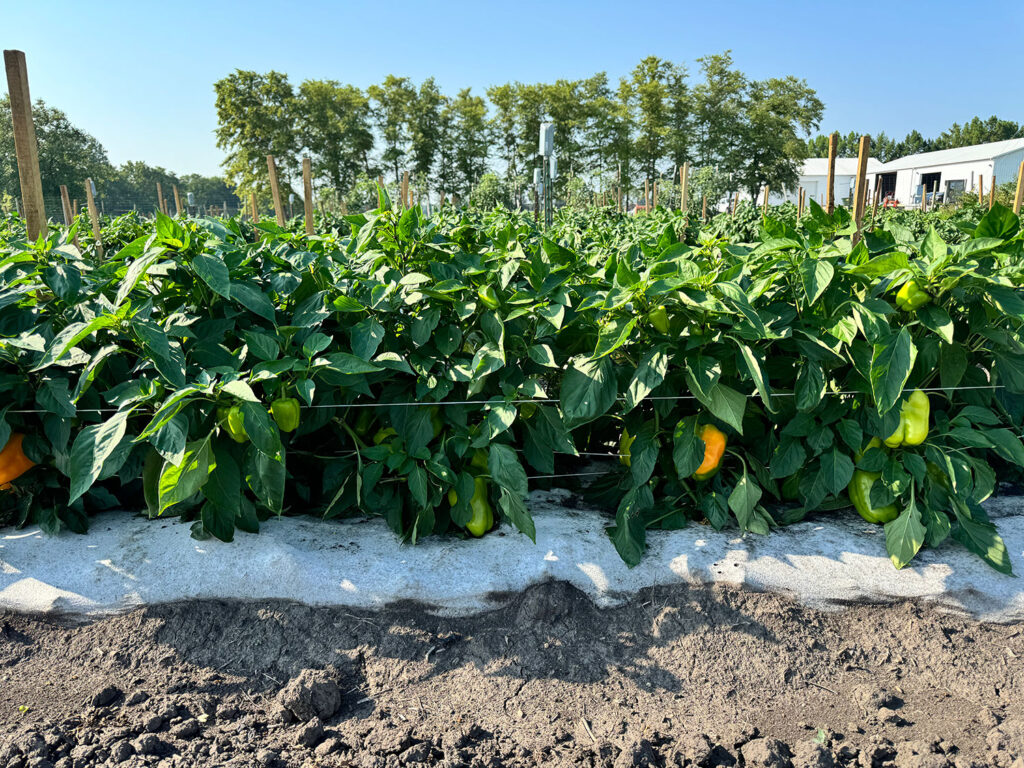
Image 3. Bell pepper variety Flavorburst (12 weeks after transplanting) grown in JCM biomulch. Photo courtesy Langenhoven.
Infrared monitoring showed clear temperature advantages from day one (Image 4). During a warm day (June 2) without irrigation, JCM maintained soil temperatures 44° F cooler than black plastic mulch, 41° F cooler than bare soil, and 37° F cooler than white plastic mulch (Image 5). With irrigation (Aug. 22), the average soil temperature of the bare soil treatment was lower than that of white plastic mulch due to evaporative cooling. Even on colder days with irrigation, the temperature control benefits remained consistent.
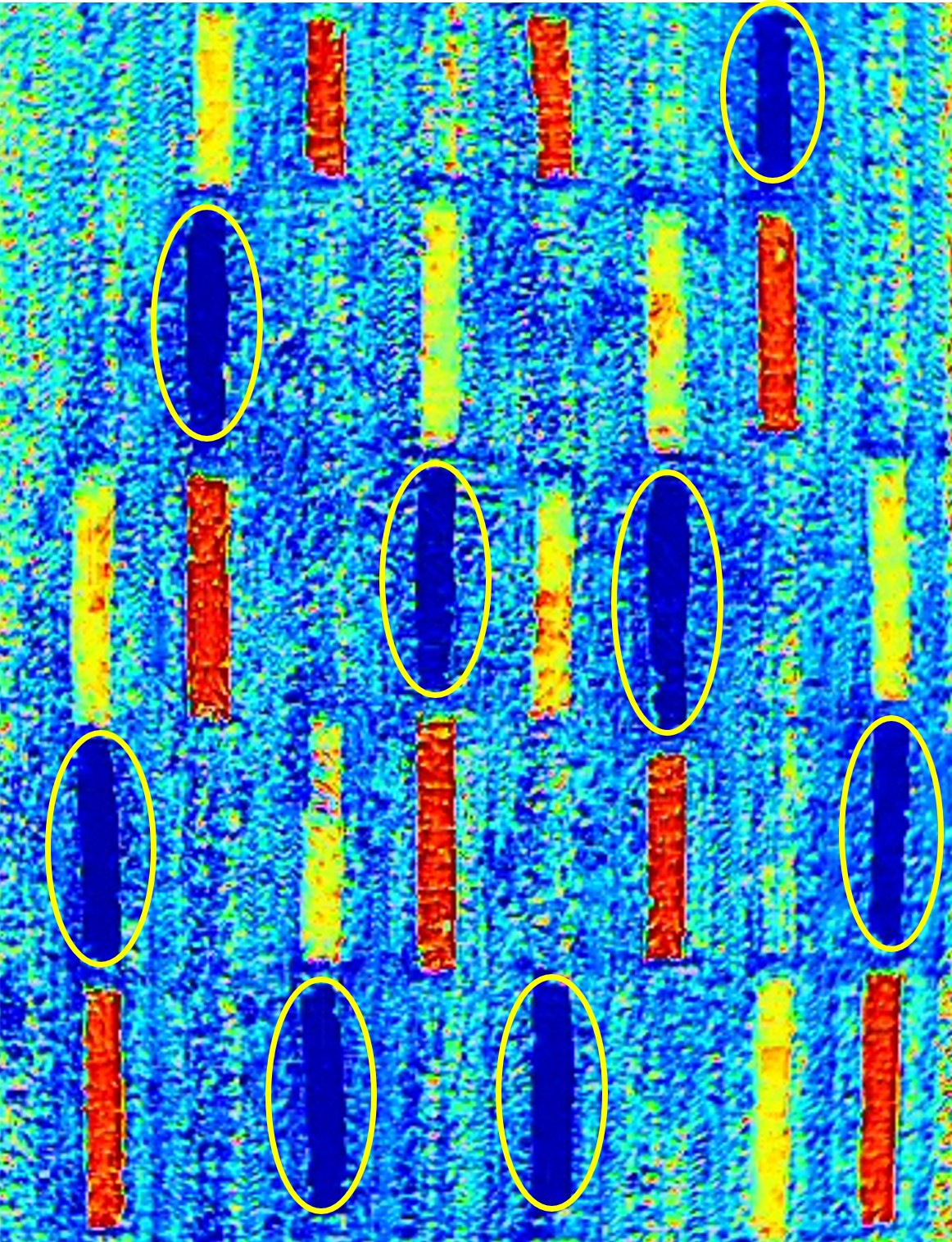
Image 4. The infrared image showed a clear contrast of temperature between the JCM biomulch and the other mulches. Yellow circles indicate JCM biomulch. Photo courtesy Wenkai Zhu.
Moisture management proved particularly effective during the trial. The JCM demonstrated more consistent soil moisture levels, especially during rainfall events and drought periods. During heavy rainfall, soil moisture under JCM decreased more slowly than under other treatments, indicating better water retention. This verified JCM can help suppress water escape by both the unidirectional water transport feature and the lowered surface temperature, thus reducing overall evaporative loss. Even during light rain events, JCM showed superior water distribution compared to plastic mulch, which often resulted in uneven water penetration through planting holes.
The results showed that peppers grown with JCM achieved the highest average individual fruit weight, surpassing plastic mulch groups by up to 4.9% (Image 6). The technology also led to significantly better crop quality, with 26% to 32% fewer small or deformed fruits compared to other treatments. Overall marketability reached 81%, the highest among all tested methods.
Environmental benefits
The environmental advantages of JCM extend well beyond its agricultural performance. The mulch eliminates the persistent problem of microplastic pollution in agricultural soils while utilizing sustainable, biodegradable materials. Its superior moisture retention capabilities reduce irrigation requirements, contributing to water conservation efforts. The effective soil temperature management achieved without synthetic materials represents another significant environmental benefit.
Image 5. Effect of different mulch types on soil temperature on a hot (Jun. 21) and cool (Aug. 22) day. Photo courtesy Wenkai Zhu.
Looking ahead
While JCM shows tremendous promise, researchers continue working on several key improvements. Current development focuses on optimizing production costs to enhance market competitiveness and further improve optical performance and water transport efficiency. The Purdue team is also pursuing organic certification to expand application possibilities. The balance between degradability and service life remains a key focus area to ensure environmental compatibility without compromising functionality.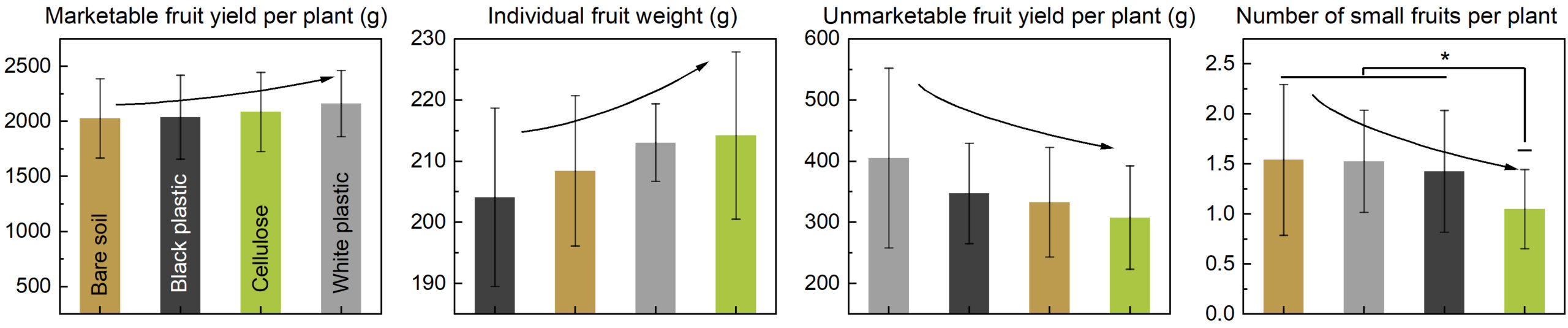
Image 6. Effect of different mulch types on bell pepper production.
This innovative mulch technology represents a significant step forward in sustainable agriculture, offering growers a practical solution that combines environmental responsibility with enhanced crop performance. As the agricultural industry continues to seek alternatives to plastic mulch, JCM stands out as a viable option that doesn’t compromise functionality while addressing crucial environmental concerns.
Tian Li, tianli@purdue.edu, is an assistant professor at Purdue University’s School of Mechanical Engineering, leading the Redesigning Natural Materials for Energy, Water, Environment, and Devices (ReNEWED) program. Her research group focuses on advancing nanoscience and accelerating the technological deployment of natural materials for engineering solutions.
Petrus Langenhoven, plangenh@purdue.edu, is a Purdue clinical assistant professor and vegetable Extension specialist. His work advances sustainable solutions for small- and medium-sized vegetable farms with technologies and sustainable practices.
Wenkai Zhu was a Ph.D. student in Li’s research group. His field of research was cellulose material innovation, heat and mass transfer.
Yun Zhang was a postdoc researcher in Li’s research group. Her field of research was biomass interface science and water-energy nexus