

Veg Connections: strategies to protect cucurbits from insect-transmitted diseases
Cucurbit pests and disease can be transmitted in many ways. Learn more about combating disease and insect threats.





Viruses and bacteria are two types of pathogens that can be transmitted by insects, and these pathogens can cause severe disease, leading to significant yield loss in crops. Once we see insects in the field, it might be too late, and plants might already be infected with the pathogen that the insect can carry. This is especially the case with insect-transmitted viruses.

Figure 1. Symptoms of a potyvirus infecting a pumpkin plant. Notice the mosaic and malformation on the leaf. Plants with reduced leaf size produce less photosynthesis, which could potentially affect yield. Photo courtesy of C. Escalante.
Insect-transmitted diseases
Aphid-transmitted viruses are a major problem in cucurbits. There are two groups of viruses transmitted by aphids that affect cucurbits: potyviruses and bromoviruses (from the family Bromoviridae). Each of these groups contains several viral species of economic importance in the Midwest.For instance, viruses in the potyvirus group include zucchini yellow mosaic virus, watermelon mosaic virus and papaya ringspot virus, among others. On the other hand, cucumber mosaic virus is a widely distributed pathogen from the family Bromoviridae, and it is the major problem in cucurbit crops.
Whiteflies transmission
Whiteflies transmit several viruses, including cucurbit leaf crumple virus and cucurbit yellow stunting disorder virus. Common symptoms of whitefly-transmitted viruses include yellowing, stunted growth, yellowing in the veins and leaf curling.Bacterial wilt, caused by the pathogen Erwinia tracheiphila, is another major disease mainly in cucumbers and melons, squash, pumpkin and watermelon. Bacterial wilt is transmitted by the striped (Acalymma vittatum) and spotted cucumber beetles (Diabrotica undecimpunctata).

Figure 2. A bacterial wilt infected cucumber plant at the stage close to complete vine wilt. Photo courtesy of J. Obermeyer.
In cucumbers and melons, the margins of the leaves start collapsing until it spreads throughout the entire plant (Figure 2). An emerging disease in the cucurbit industry is cucurbit yellow vine disease, caused by the bacterium Serratia ureilytica.
Squash bugs (Anasa tristis) transmit this disease in many cucurbit crops, including zucchini, squash, watermelon and melons (Figure 3). Common symptoms of this disease are yellowing of leaves and vines, stunting and scorching of leaf margins. Some plants will have discoloration in the vascular tissues (phloem). This disease can be easily confused with bacterial wilt given similar symptoms. For this reason, getting an accurate diagnosis from a certified lab is important to make appropriate disease management decisions.

Figure 3. Eggs and first instars nymphs of squash bug on a pumpkin leaf. Photo by Obermeyer.
Natural helpers: Get to know the good insects on your farm
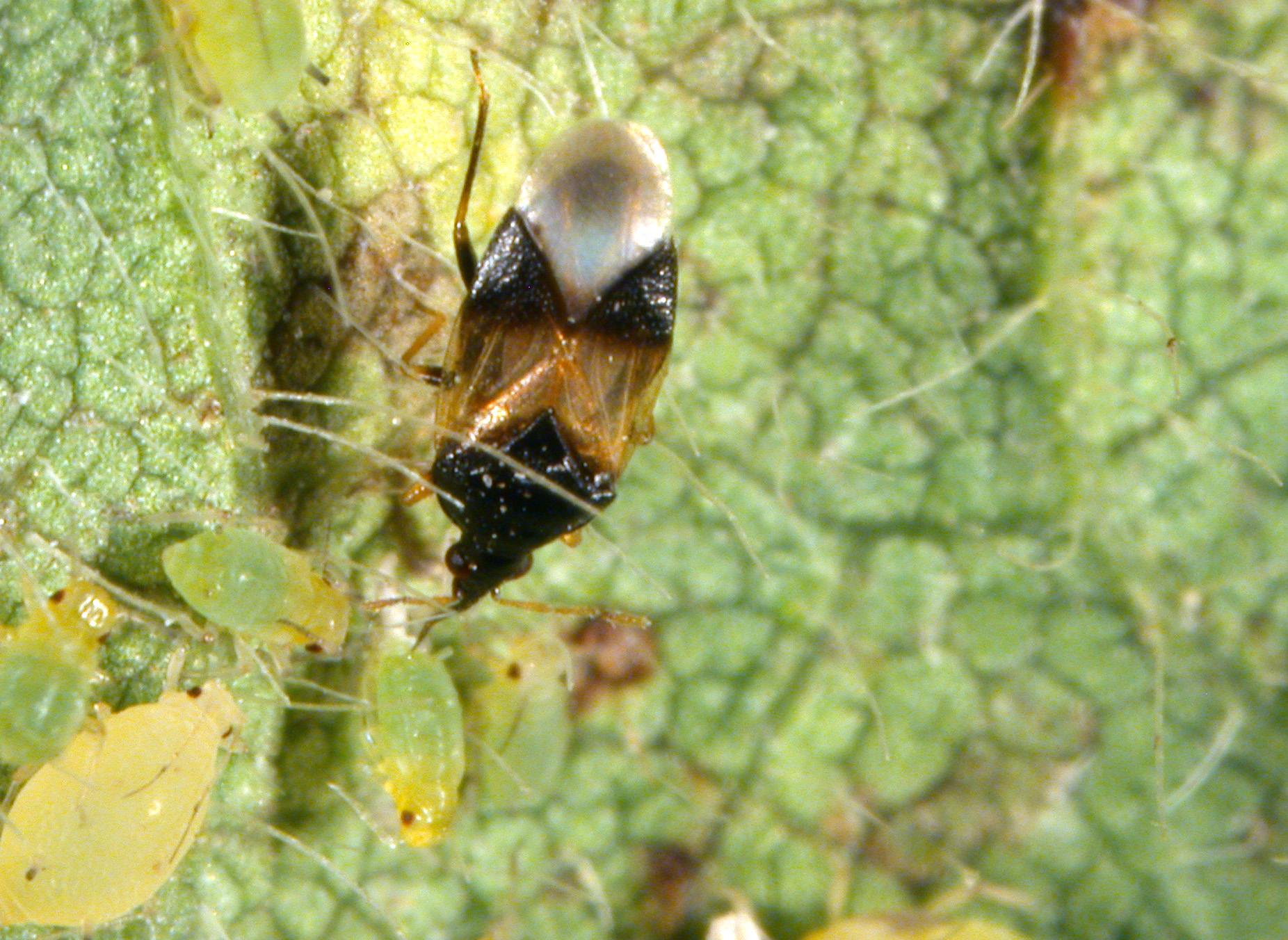
In the absence of disease, many of these insect pests can be managed through supporting healthy populations of natural enemies. These include parasitoids that attack aphids, damsel bugs (Figure 4), minute pirate bugs (Figure 5), spiders, and many other predatory and parasitic organisms that attack insect pests.Minimizing broad spectrum chemical applications, spot-treating infested areas, reducing soil disturbance and providing diverse vegetation around the field, including flowers, will help to enhance these populations and provide a local habitat for them to reside in when pest densities are low in the field.

Figure 4. A damsel bug (Nabidae) placed along a ruler to get perspective of their size. They are fast and voracious predators. Photo by Obermeyer.
Insect and disease management
The most important step of pest management is proper identification. Every state has a pest diagnostic clinic that can help identify your problem. Once the causal agent has been identified, you can discuss your options with the state specialist.The best approach to managing pests is to incorporate an integrated system that includes a combination of cultural practices involving crop rotation, resistant varieties, beneficial organisms and biological or synthetic products. Every farm represents a unique scenario, but here are some general guidelines:
Arrest insect feeding
Given the nature of aphid-transmitted viruses, management strategies should arrest feeding and movement as quickly as possible. The action threshold or tolerance level of these pest populations is reliant on whether the disease-causing agent is present. The best practice for managing these diseases is to start with disease-free plants. In addition to being vectored, some bacterial and viral diseases are also transmitted through seeds.Buy disease-free seed and scout young plants for early symptoms. Remove symptomatic plants as quickly as possible. Next, monitor and manage the insect vectors. Aphids reside on the underside of leaves and often colonize the edges of fields first. Scout frequently, turning over the leaves, to watch for the presence of aphid populations.
Mark infested plants with a flag and monitor population growth. If aphids are spreading or you have diseased plants, you should consider applying insecticide. Avoid using broad-spectrum products like pyrethroids or carbamates, as they will harm the beneficial insect communities. Instead, aim for products that are more specific in their mode of action, such as flonicamid, which targets piercing-sucking pests.

Figure 5. The minute pirate bug (Orius insidiosus) feasting on aphids. They will also prey upon thrips, mites, and whiteflies along with others. Photo by Obermeyer.
Remove infected plants
Symptomatic plants infected with bacterial wilt should be removed to reduce inoculum in the field. Transplants of cucumbers and cantaloupes should be treated with a soil drench at planting to protect young seedlings from beetles. Afterward, all cucurbits should be scouted weekly, along a randomized transect, sampling seven to 26 plants, based on a threshold of 5:1 beetles per plant.A foliar application of insecticides to combat cucumber beetles should be applied when the threshold is met. There are no economic thresholds developed for squash bugs. They are best to treat with a foliar insecticide application soon after egg hatching. Scout plants by looking for eggs on the undersides of leaves. Control early in the season will minimize cumulative damage.
Unfortunately, once a plant is infected with a virus, there are no available treatments to cure it. However, bacterial diseases can be managed using copper-based products or bactericides that contain active ingredients such as antibiotics. Disinfectants like hydrogen peroxide and peroxyacetic acid can also be effective. Always read product labels carefully for proper usage, and consult your state specialist to determine appropriate application rates.
Laura Ingwell is a Purdue University associate professor of entomology in the Entomology Department. Cesar Escalante is a University of Georgia professor of agricultural and applied economics.