

Idaho Gold: Soil health big focus of women-owned sweet corn seed grower
Discover how Chris Gross Farms uses soil health practices like cover crops and rotation to boost sweet corn seed production in Idaho.





Owner Chris Gross began shifting toward biologically oriented farming methods in the late 2010s after facing soil inconsistency, weed pressure, and water infiltration issues.
“The biggest shift we’re seeing is we’re more focused on soil health than we have been in the past, because we begin to see the quality of food coming from out fields,” she said. “If I take care of the biology of my soil, then that biology of the soil will take care of my plant.”
Building stronger soils
Chris Gross Farms employs minimal tilling, crop rotation, and cover crops to improve soil structure and nutrient balance. Fields that once showed water runoff and puddling now absorb water consistently.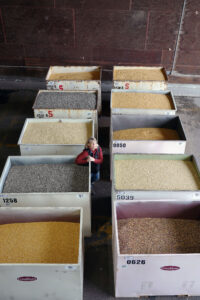
Chris Gross of Chris Gross Farms, a diversified southwest Idaho farm that grows sweet corn seed and other crops. Photos courtesy of Crookham Seed.
The farm grows more than half a dozen crops, including popcorn, field corn, mint, and dry beans, with three- to five-year rotation spans. Cover crops include blends of rye, triticale, and winter pease, with future plans for six- and eight-way mixes. These strategies form the core of the farm’s soil health practices, ensuring resilience across multiple soil types.
“Every crop you put in is going to do something different to your soil,” Gross said. “If we can change our cropping systems every year, then our soil can recover and adapt. It gives us a much better perspective on soil health, less disease, and less probability of fungal or bacterial infection.”
Production challenges
Spider mites pose the greatest pest threat, especially after wheat harvest when they migrate to other fields. Although overall disease pressure remains low in Idaho’s dry climate, persistent rain can cause black spots that collapse corn stalks.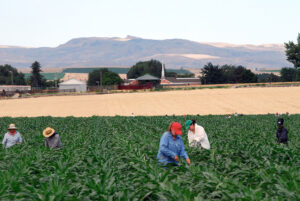
Soil health is big focus of women-owned sweet corn seed grower.
Maintaining pure isolations from neighboring fields is also a challenge, especially with less land available. High winds can disrupt pollination. For seed corn, crews work fields up to seven times in two weeks to ensure tassels are pulled at the right time.
Gross grows popular sweet corn seed varieties, including Ambrosia, Troubadour, and Xanadu, for Crookham Co. in nearby Caldwell.
A journey back to agriculture

Chris Gross Farms has been employing soil-friendly practices since the late 2010s.
Gross initially pursued a career outside of farming, earning degrees in business administration and sports psychology. After coaching softball and working in sports retail, she returned to the family farm in 2012 to help with the mint harvest. She began growing corn seed in 2015 and took over operations after her brother, Ray, passed away in 2017.
Gross officially established her own farm in 2020. With guidance from her brother, Doug, she embraced leadership in the male-dominated ag industry. “I feel like you have to prove your credibility as a female,” she said, noting how once respect is earned in the farm community, it endures.
Women in farming and succession
As growers consider succession planning, Gross sees opportunities for more daughters to step into leadership. “Farming has to be a passion. It’s not tied in with your gender at all,” she said. “Maybe that’s the one thing you might see in a woman farmer — we’re very interested in giving back to our communities. That’s why continuing strong soil health practices is so important for the next generation.”
— Doug Ohlemeier, Assistant Editor