

Salinas Biological Summit seeks ideas from all sides





Whether regulations, consumer activism, pest and disease resistance or the growing sustainability movement in agriculture, the issue of crop inputs is getting more attention. In the U.S., the focus on chemicals in agriculture is the greatest in California, which in January released the Roadmap to 2050. That plan mandates the elimination of certain “priority pesticides” and making sustainable pest management practices the “de facto” method throughout the state to treat pests, disease and weeds for all crops.
The document is a collaboration from the California Department of Pesticide Regulation (DPR), California Environmental Protection Agency (CalEPA), Ag Innovations and the California Department of Food and Agriculture.
Dennis Donohue, director of the Western Growers Center for Innovation & Technology in Salinas, California, said in the year leading up to the Roadmap to 2050 release, anticipation grew.
In talking with Western Growers’ members and board members, Donohue decided “it would be a good idea if we got ahead of things a little bit.”
He said the industry wants to avoid another “methyl bromide situation,” referring to the effective fumigant relied on by growers of strawberries and other crops that was banned in the U.S., leaving growers without an effective alternative.
‘Getting the growers in the room’
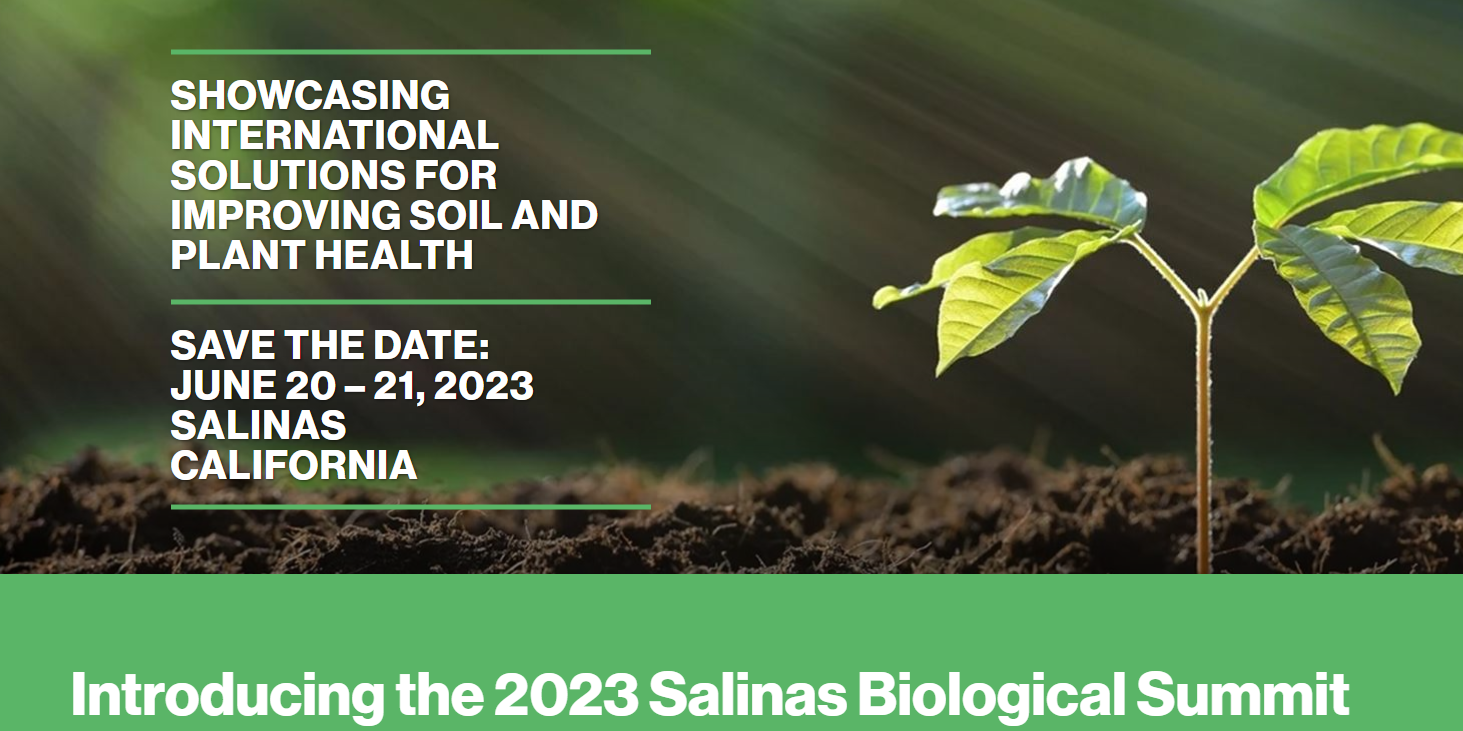
That’s the genesis of the Salinas Biological Summit, June 20-21, according to Donohue. The event is presented by Western Growers and New Zealand-based Ag Tech consultancy Wharf42. The two organizations also collaborated on an ag tech conference in Auckland, New Zealand, in October.In fact, Donohue said precision ag tools will help in the transition period as growers decrease pesticides.
The summit has several objectives.
“The thinking was really two-fold, that we needed a different approach to trialing, that was embedded in a live commercial setting, because that’s how you have a better chance at truer economics and efficiencies,” he said.
The second part is education and communication, and getting all viewpoints involved in the process. That’s why the summit has representation from not only the growers and biologicals manufacturers, but also regulators, retailers, investors, consumer groups and international agricultural interests.
“What I try to do and what my role is, is to help facilitate solutions for Western Growers members,” he said. “The reality is that production ag is at the intersection of a lot of agendas. We’re where the rubber meets the road.”
With so many diverse agendas, Donohue said it’s important to have all sides hear from the grower community.
“We believe one of the things we can do is get growers in the room, making sure their voice is heard,” he said. “As you might imagine, when there is regulation and change, people don’t always like that.”
The third role of the summit is a series of “meaningful” breakout sections, targeting specific crops and the pest, weed and disease pressures they face.
“When you encounter the start-up world, a certain percentage will want to talk to the strawberry guys, or they are interested in INSV, which has really plagued the lettuce,” Donohue said. “We want targeted breakout sessions for them.”
Global approach
The search for biological solutions to pests, weeds and diseases is not a U.S. issue, Donohue said, but a global one.“At tech is a global game and we’ve been fortunate that we’ve gotten global attention,” said Donohue, who has been coordinating with California Department of Food and Agriculture Secretary Karen Ross’ office.
He said the CDFA has confirmed representatives from the United Kingdom, Australia, New Zealand and Israel will attend, and the CDFA continues to bolster registrations from other countries.
“Frankly, from what I’ve observed, efficacy and economics is best served by a global view,” he said. “Scale never hurts in terms of escalation and economics.”
After the summit, some of the international representatives will visit “permanent crop” farms and facilities in the Reedley, California, area, where stone fruit, grapes, citrus and almonds are grown.
The Salinas Biological Summit’s agenda and list of speakers continues to grow, and registration is available on the website.
“We believe we’re putting significant people on stage that are really directly involved in the future of this category,” Donohue said. “The idea is to have cutting-edge content and high-level speakers to really come out of the conference with a game plan that supports our objective, which is to accelerate the identification of the best new tools as the wonderful world of IPM shifts.”