
How Salad Days Farm thrives with organic farming, direct sales
Certified organic grower Maggie Dungan shares how Salad Days Farm builds soil, community and value-added products.





Key takeaways
- Maggie Dungan founded Salad Days Farm in 2015.
- The farm has been certified organic since 2016.
- Salad Days Farm focuses heavily on direct-to-consumer sales.
- Value-added products help reduce waste and extend seasonal revenue.
- Soil health and cover cropping are central to the farm’s practices.
- The farm plans to expand into frozen and freeze-dried products.
When Maggie Dungan launched Salad Days Farm in 2015, she didn’t come from a long line of farmers or grow up immersed in agriculture. Instead, her journey began with a personal exploration of nutrition and food.
“I didn’t grow up being outside much,” Dungan said. “It started in my late 20s, just learning first about nutrition. I thought I’d be a holistic nutritionist, but kind of in that same thing, just learning about food preservation and growing your own food, I really felt myself taking to it.”
When she and her husband moved to their current property in 2015, Dungan decided to turn that passion into a farm. From the beginning, the mission was clear:
“Feed my community healthy local food, take care of the soil, take care of the earth,” she said. “We’ve been certified organic since 2016 — really from day one. It’s very important to me that not only are my food and people healthy, but the soil and the earth are healthy, too. We are stewards of the land.”
That stewardship mindset guides every decision on the farm.
A name with meaning
The name “Salad Days” was coined by her husband, who works outside the farm but offered the suggestion early on.
“He’s like, ‘Hey, how about Salad Days?’” Dungan recalled. “I said, well, people are just going to think all we grow is salad, but we grow most vegetables and a lot of lettuce and things you can make into salad.”
But the phrase carries deeper meaning. Salad Days refers to a period of youthful enthusiasm and carefree living.
“It’s kind of like the best times of your life,” she said. “I always like to think no matter how old I get or how long I do this, that I’m still living my salad days.”
That youthful energy, combined with a willingness to keep learning, is essential in farming, where each season offers just one chance to get it right.
“I’ve been farming for 10 or 11 years, which means I’ve only grown some of these tomatoes like 10 times,” she said. “Every year is only one opportunity to learn how to do something.”
Small footprint, big diversity
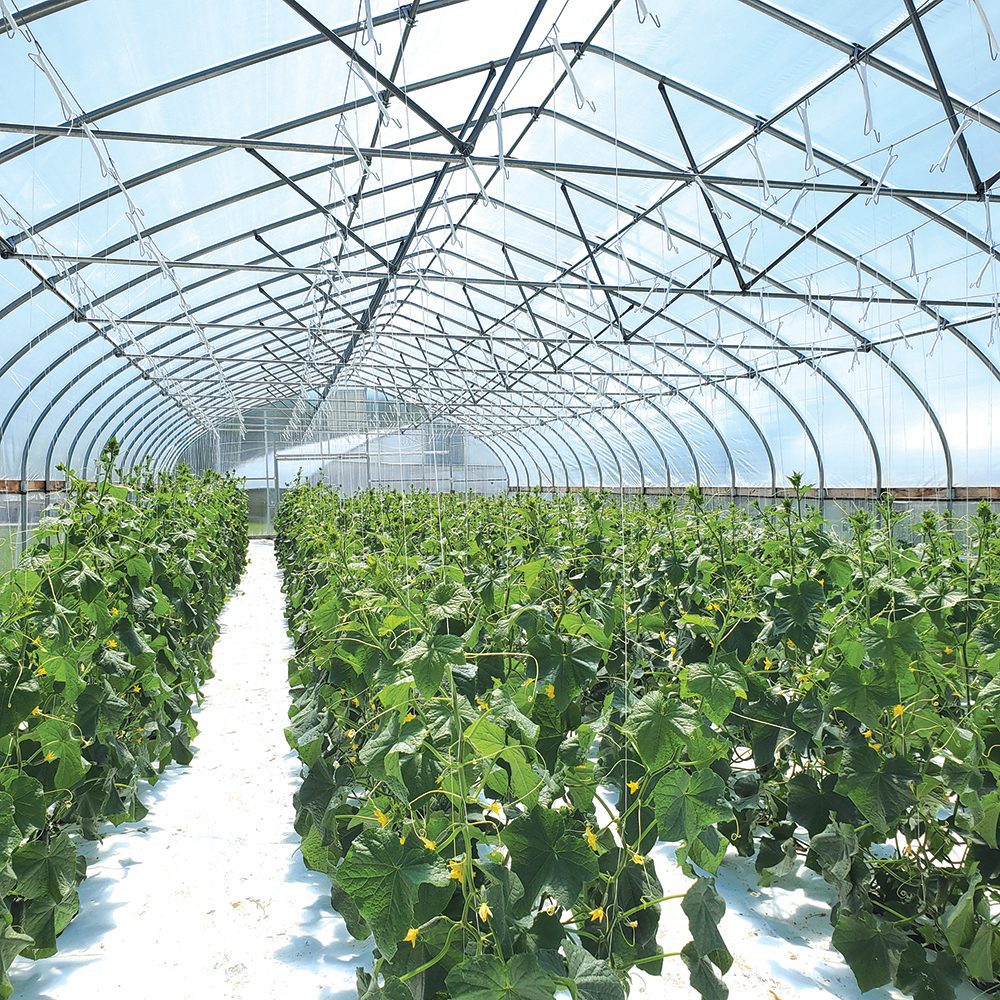
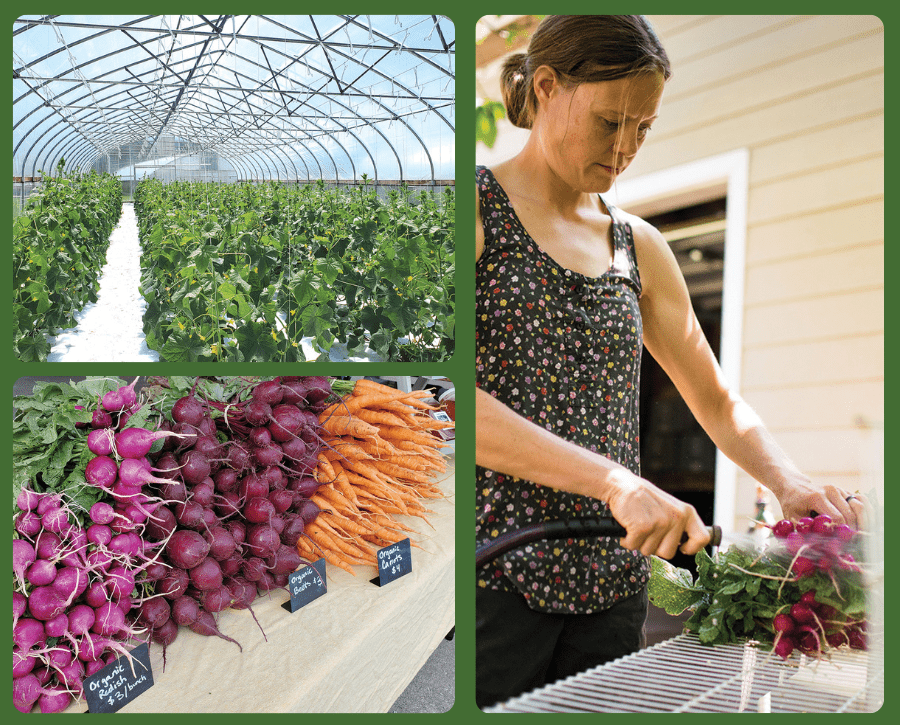
Salad Days Farm sits on 30 acres, though only about two acres are farmed intensively. Five high tunnels extend the growing season,supplying customers nearly year-round.
The crop mix is broad and market-driven.
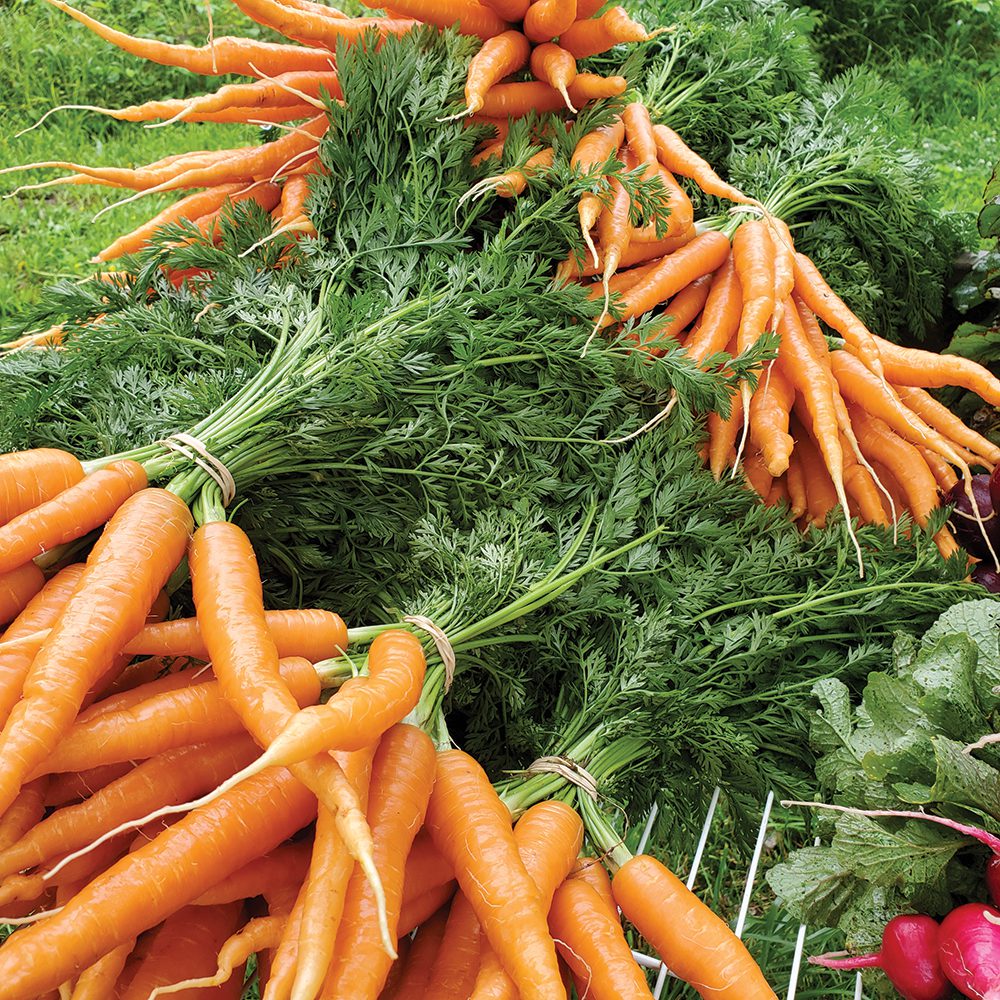
“We grow a big diversity: lettuce, root crops, a lot of carrots, tomatoes, peppers, eggplant, kale, herbs,” Dungan said.
Diversity is also a risk-management tool, helping buffer against weather challenges, pest pressures and market shifts.
But Dungan doesn’t stop at fresh produce.
A defining feature of Salad Days Farm is its extensive value-added program. Dungan built a commercial kitchen on-site and uses it to transform surplus produce into shelf-stable goods.
“We do pickles and jams and dried herbs and teas and popsicles,” she said. “Anything we can come up with so that there’s no waste on the farm.”
RELATED – Ellijay Mushrooms: Growing community in North Georgia’s hill country
The products often begin with a problem: abundance.
“It might come out of, ‘Hey, we’ve got an abundance of carrots that might be kind of B-grade or not A-grade sellable. What are we going to do with all these things?’” Dungan said. “Instead of dumping them out, it’s like, ‘OK, let’s make carrot cake jam.’”
Turning seconds into premium products reduces waste, creates new revenue streams and extends the farm’s presence into winter.
“Creating a product people can keep on their shelves that doesn’t go bad helps level the load for our business,” she said. “Being able to offer it in the winter at our market helps.”
It also creates employment opportunities.
“We have to make all those things,” Dungan said, noting the farm typically employs about seven people. “I’ve got a great crew. A lot of people have been here many years and really enjoy what they do.”
Direct to consumer
Today, almost all of Salad Days Farm’s sales are direct-to-consumer — through farmers markets, the on-farm store or a local retailer. The business wasn’t always structured that way.
“I did a lot of wholesale before,” Dungan said. “Going into 2020, I was going to double down on wholesale. I had some school contracts and was going to go with it. That kind of went away, so I had to pivot.”
The shift strengthened her connection to customers.
“I really enjoy being able to interact with the customer and seeing the face of my products,” she said.
Direct marketing also reinforces the farm’s organic identity and transparency. While some growers question the cost or value of certification, Dungan sees it as essential.
“It’s important for me that as I’m counted as a farmer in the agricultural sector, that I’m represented as organic,” she said. “I want the people with the money funding projects to know that organic is important,” she said.And I want my customers to know I’m holding myself to a standard.”
Organic by design
Dungan taught herself to farm, and she learned through an organic lens.
“I don’t really know any other way,” she said. “If the bottle says not to drink it, why would I put it on a plant that I’m going to eat?”
Soil health anchors the system, with cover cropping and green manures as central strategies.
“We use a lot of cover cropping, very minimal tillage and a lot of crop rotation,” she said. “We don’t like to purchase off-farm fertility, but we still do some. Being able to grow it ourselves is always great.”
RELATED: Growing fruit – and farmers – in Michigan
Without herbicides, the farm relies on cultural practices and ecosystem balance.
“We just try to foster a healthy environment for all the bugs and good microbes,” she said.
High tunnels add another layer of resilience, allowing production of greens and other crops even in colder months, though demand can still outpace supply.
Tools and tech
While Dungan describes herself as a “do-it-yourself problem solver,” she’s not opposed to technology.
“We’ve used a lot of sensors and automatic stuff with Wi-Fi and data collection,” she said. “When it comes down to it, it’s just finding what works for your system.”
That pragmatic approach — adopt what fits, build what’s needed and stay flexible — has helped the farm evolve without losing its identity.
The road ahead
Rather than expanding acreage dramatically, Dungan is focused on strengthening what she has built.
“I’ve worked so hard to build where I am that I’m trying to just keep the machine moving and enjoy it,” she said.
Still, innovation continues. The farm recently secured a grant to expand its offerings.
“We’re going to start offering some frozen vegetables and freeze-dried products,” Dungan said.
The additions will further reduce waste, extend seasonality and offer customers new ways to enjoy local produce year-round.
After more than a decade of farming, Dungan remains grounded in her mission: feed her community, protect the soil and operate with integrity.
“I feel like farming is the most important job in the entire world,” she said. “People have to eat.”
For Dungan, the work is demanding, the learning curve steep and the seasons fleeting. But as long as she’s farming, she plans to keep living her “salad days.”
FAQs
When was Salad Days Farm established?
Salad Days Farm was launched in 2015.
Is Salad Days Farm certified organic?
Yes, the farm has been certified organic since 2016.
What crops does Salad Days Farm grow?
The farm grows lettuce, root crops, carrots, tomatoes, peppers, eggplant, kale and herbs.
How does the farm sell its products?
Most sales are direct-to-consumer through farmers markets, the farm store and local retail.
What value-added products does the farm make?
The farm produces pickles, jams, dried herbs, teas and popsicles.
A graduate of the University of Miami, Keith Loria is an award-winning journalist who has been writing for almost 20 years. View his recent writing at keithloria.contently.com.