

Labor, smart farming tech, and agrivoltaics: 6 takeaways from Great Lakes EXPO 2025
We spent a week in Grand Rapids at the 2025 Great Lakes EXPO. Find out what we learned during our time at the show.





A recent study coauthored by the Michigan Vegetable Council and Michigan State University confirms as much, saying the state today hosts over 3,000 fruit and vegetable farms across nearly 153,000 acres.
Many of those growers — alongside fellow farmers from all over the Midwest — and a large contingent of industry professionals who supply those farmers with the seeds, crop protection chemicals, machinery and smart farming technologies they need to produce a crop descended upon Devos Place in downtown Grand Rapids for three days of networking, educational sessions and all things specialty crops in early December.
One common complaint we heard at the show, however, was draped in irony: U.S. specialty crop growers are becoming so skilled at producing healthy, abundant fruits and vegetables — and cold storing them for long periods of time, too — that an oversupply of fresh produce on the market made it difficult for some growers to sell last year’s crops at a profit. Those same growers are banking on improved access to foreign trade markets, less competition locally from imported produce and more labor force certainty in 2026.
Here are six additional takeaways from the 2025 Great Lakes Fruit, Vegetable & Farm Market EXPO:

Farm market tour impresses: The day before the show officially opens is reserved for the popular Great Lakes EXPO Farm Market Bus Tour. Attendees, industry newbies and researchers from Michigan State Universities’ Horticulture program all bundle up, grab their coffee and pile onto buses at the crack of dawn to spend the day exploring and learning from a handful of the state’s top farm markets and agritourism destinations. A top takeaway after attending the tour this year? Agritourism and Farm Markets are two practical tools that help farmers diversify on-farm income streams beyond crop production when crop prices or demand stagnates. And they are both very effective branding and marketing tools that can help any farm build customer loyalty and a community with your neighbors and friends.


A growing Next Gen: It didn’t seem to matter which event we attended — our own 40 Under 40 Class of 2025 reception, Wednesday night’s Master Farmer and Scholarship Awards gala or just a quick stroll around the trade show floor — it’s clear the next generation of the fruit and vegetable industries are driven and engaged, passionate and the industry overall appears to be in good shape for the future. And we even got to hang out with Apple Girl Kait, aka Kaitlyn Thornton, the Pacific Northwest farm girl turned social media sensation who is making apple farming cool again online.

Smart farming tech and specialized machinery still matter: Several sales reps manning booth space at the show told us growers are still interested in adopting new precision ag tech and machinery to reduce their farm’s reliance on manual labor and help them make faster, more impactful decisions on crop management. The trade show was particularly awash with large spray drones, autonomous smart orchard and vineyard sprayers, and robotics for grading, sorting and packing. At the same time, the growers we spoke with are keenly focused on technologies that deliver a fast and robust return-on-investment, so tech companies must be able to explain how their products fit into the specialty crop workflow while immediately driving revenue gains.
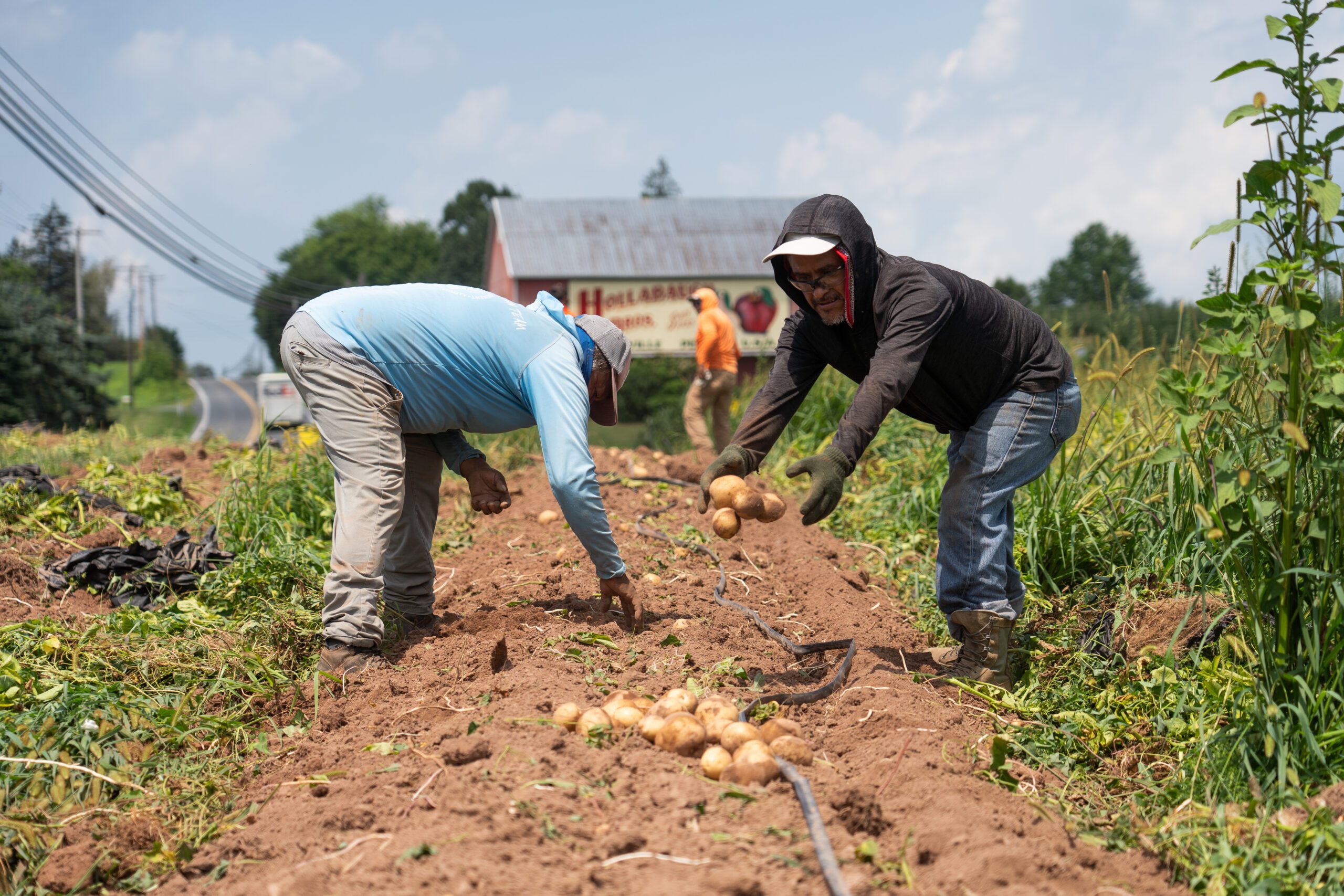
Good labor news: While H-2A labor will be more affordable in 2026 and farm labor regulations are being eased at the federal and state level, much work remains to be done. One session leader, Dr. Philip Martin, professor of agricultural and resource economics at the University of California Davis, said growers are attacking labor plans with a three-pronged investment strategy: adopting robotics to support the labor they already have and automate menial tasks, improving employee housing and offering benefits like daily meals to attract the most productive H2A workers, and buying land abroad or in ag labor-friendly states to produce crops with lower overhead. In that same session, retiring NCAE president Michael Marsh told audience members he’s optimistic the Adverse Compensation Adjustment will be a benefit to farmers by lowering the Adverse Effect Wage Rate, and he believes Trump administration Secretary of Labor Lori Chavez-DeRemer is more “ag employer-friendly” than the previous administration’s labor head.

Emerging production systems: A pair of educational sessions covered two trending crop production systems: transitioning acres to organically certified practices and agrivoltaics, or growing specialty crops within solar panel fields. Michigan cherry farmer and MSU Transition to Organic Production Program (TOPP) farmer mentor Joanne Westphal said that getting her 84-acre fruit and agritourism operation near Traverse City certified organic allowed her “to double my prices without any push back from customers” while building a “whole new segment” of customers. And Iowa State University professor Ajay Nair busted the myth that growing produce in solar fields means sacrificing yield and quality. Nair and his team found it was the exact opposite at their agrivoltaics research plots in Ames, Iowa, because the solar panels create a microclimate that is advantageous for several specialty crops. “You can grow broccoli, you can grow squash and you can grow peppers at commercial scale without any compromise on yields or quality,” he said, adding strawberries did not fare well when interplanted with solar arrays. Raspberries did show promise in the futuristic production system.
If you missed this year’s EXPO, the 2026 show will be held in Grand Rapids, Mich., December 8-10. Head to glexpo.com to learn more.