







Dec 5, 2025Hollabaugh’s Pennsylvania vegetable, farm market success
Moving into vegetable crops and other tree fruit has helped Pennsylvania apple grower Hollabaugh Bros. Fruit Farm & Market diversify through seven decades of successful growing.
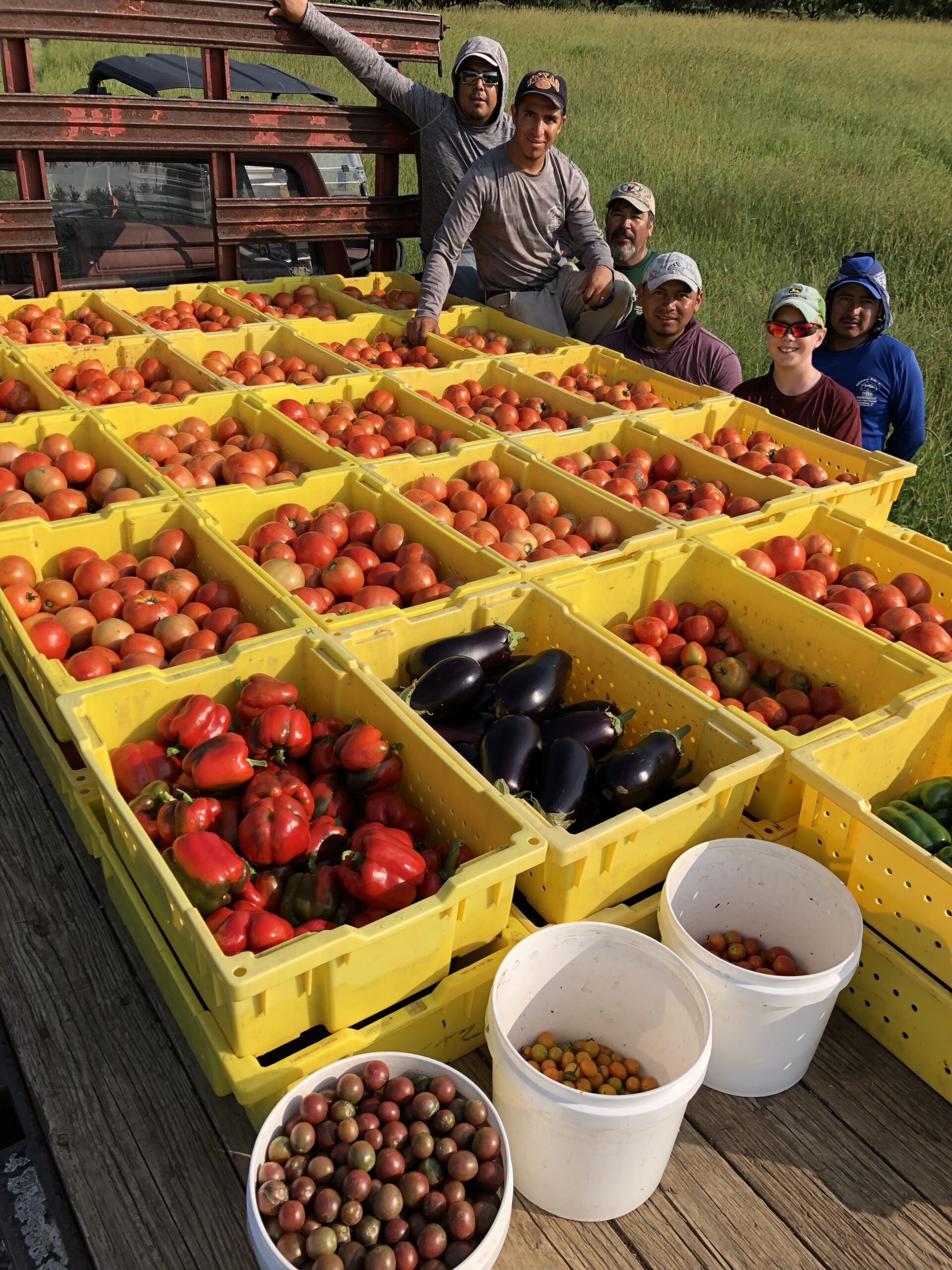
While apples and peaches remain its core crops, Hollabaugh later branched out into a variety of vegetables such as asparagus, sweet corn, tomatoes, along with blueberries, raspberries and strawberries. All are grown in Biglerville, Pennsylvania, 15 minutes from Gettysburg National Military Park.
“Diversifying from tree fruits into small fruits and vegetables helped extend our growing season, offering a more dynamic mix of produce to our customers,” said Ellie Hollabaugh Vranich, business and retail market manager. “Growing small fruits and vegetables has helped diversify our offerings and maximized our marketability to our customers, both wholesale and retail.”
The diversification also expanded Hollabaugh’s income sources to support a growing family and offer depth in production to help buffer years when certain crops may have been affected by weather, she said.
“It allows us some control over market costs that can fluctuate substantially depending upon the time of year and growing season,” Hollabaugh Vranich said. “Our production of these crops is much more small-scale than any of the tree fruits we grow. Our economies of scale and management of these crops is sometimes less prioritized than our tree fruits, but it has become a relevant component of our marketing mix, and one we are all glad we do.”
U-pick, agritourism success
Growing a wide mix allows Hollabaugh to customize its community supported agriculture (CSA) program and incorporate learning and hands-on agricultural experiences for children into its farm events, she said.
In 2012, the farm replaced its original 1950s retail market with a larger farm market..
“Our retail market is the connection point between our community and our farm,” Hollabaugh Vranich said. “We are woven together deeply and mutually beneficial to each other. We feel it’s critical to play a role in helping consumers understand where their food comes from. COVID taught our society that food doesn’t just appear on a grocery store shelf. When supply chains failed nationwide, consumers turned to farms to feed them — and we did, because we were able to remain somewhat insulated from supply chain challenges happening on a larger scale.”
Hollabaugh’s educational “bee room” inside the market is dedicated to teaching customers about agriculture.
“We work hard to tie education into many of the events and festivals we host,” Hollabaugh Vranich said.
While the farm has offered u-pick apples for more than two decades, it has more recently added blueberries and cut-your-own flowers.
“U-pick is a great additive offering that gives folks something hands-on to do when they visit the farm,” she said. “For us, it is a relatively small piece of our whole puzzle, but it serves its purpose. Remember that you’re pricing an experience, not a commodity.”
The farm also hosts events like festivals, bunny trails and Mother’s Day activities, which help attract new customers and expose consumers to farm life to show them the challenges growers face, Hollabaugh Vranich said.
“We dabble very gently into the world of agritourism,” she said. “For us, it’s critical that we work very closely with our insurance company to ensure what we’re doing on the farm is covered. Sometimes, that means we can’t do things we want to do. But, in the litigious society in which we live, we’d rather have a farm than lose it to a lawsuit we can’t defend.”
Managing pests and costs
Inflation combined with escalating yearly AEWR rates and other input costs continue to pose challenges.
“Labor costs continue to skyrocket unsustainably as a result of the AEWR that continues to climb year after year,” Hollabaugh Vranich said. “We manage our costs to the best of our ability, and we make the most of every crop we are blessed to harvest.”
While the region’s climate and soil types are optimal for fruit, berry and vegetable production, heat and humidity also invite disease. All Mid-Atlantic tree fruit growers must maintain consistent and thorough cover sprays based on weather conditions, disease modeling and pest pressure, said Brad Hollabaugh, president and general manager.
“Managing insect pests requires the use of weather data, establishing a biofix and using insect models carefully developed by our friends at Penn State University to properly time cover sprays with effective materials to prevent damage from and spread of insect populations,” he said. “Thorough, well-timed cover sprays must be used to allow a successful growing season.”
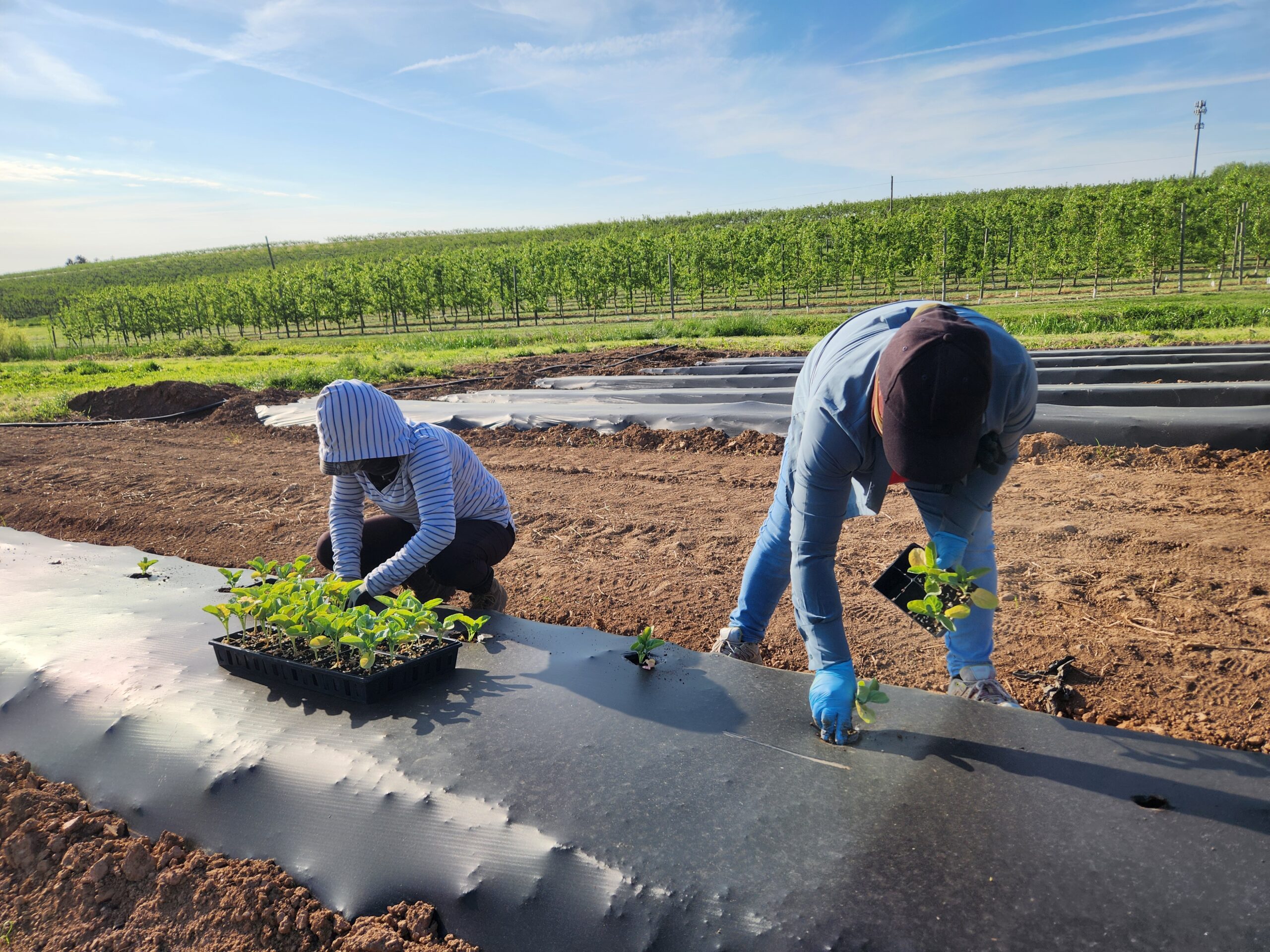
Hollabaugh employs mating disruption as a passive form of insect control. Predatory wasps invade brown marmorated stink bugs (BMSB) and other insect egg masses that help maintain control, Brad said.
Rotating crops like corn, soybeans, sorghum, sudan grass and rapeseed also enriches soil with organic matter, he said.
“In all cases for disease, insect and weed management, it is critical to implement a strategic resistant management program that rotates chemistries of chemicals,” Brad said.
Technology factors into all facets of Hollabaugh’s business, improving production, efficiency and decision-making. Automated irrigation technologies monitor soil moisture levels, while digital controls and soil sensors regulate water delivery frequency and timing, Ellie said.
Family lineage
“New growers should have a clear, strategic plan in place for marketing their fruit before the first crop is planted,” she said. “The first step for any new grower is to know your market. Growing with no plan is a good recipe for failure.”
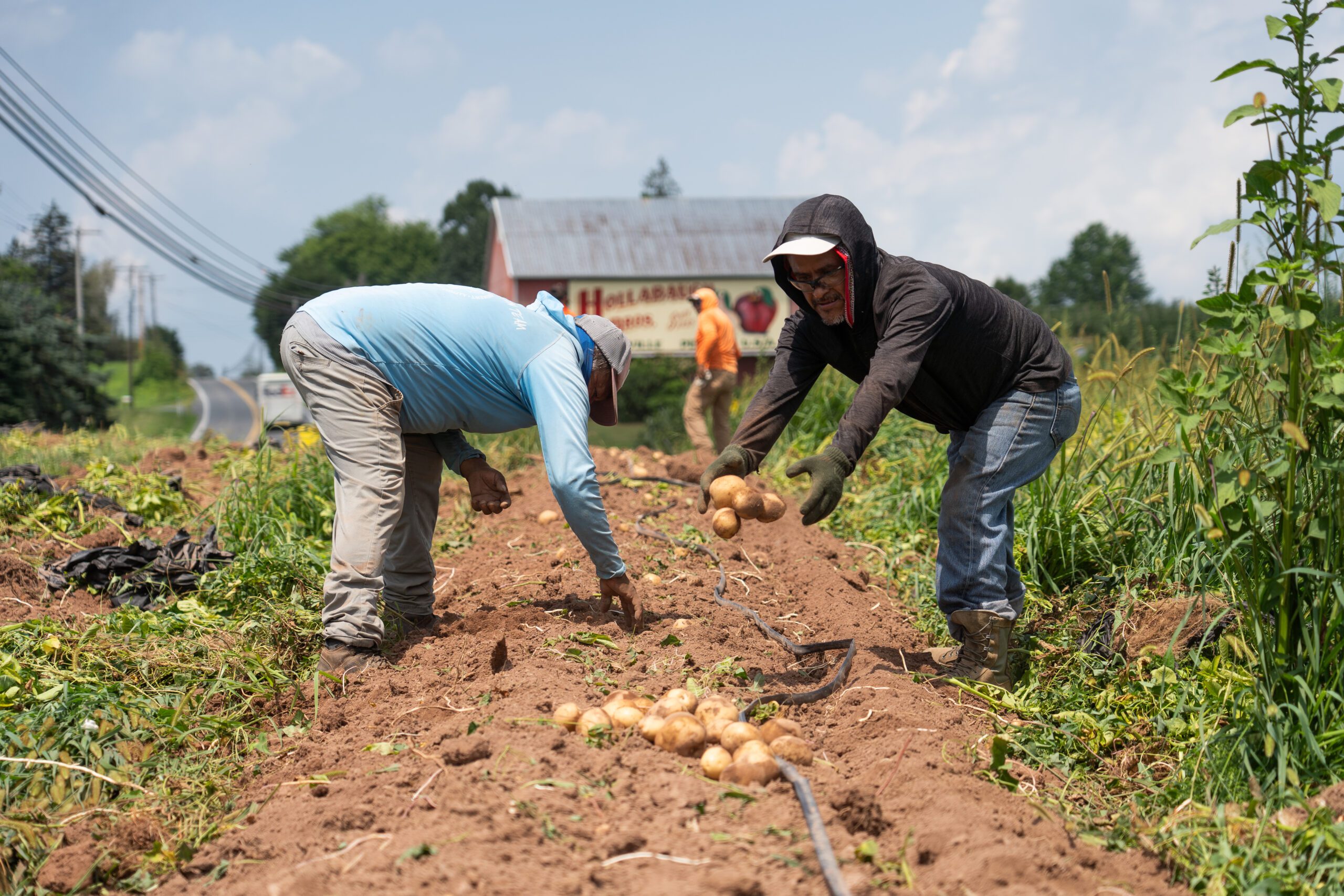
 Hollabaugh Bros. is run by second- and third-generation family members. After spending their childhoods picking potatoes, tomatoes, cherries and other fruits on southeast Pennsylvania farms, twin brothers Donald and Harold Hollabaugh began farming in 1955. Both retired from the business in 2007, with Don passing away in 2016 followed by Harold in 2023.
In 2022, third-generation fruit grower Bruce Hollabaugh, 41, the son of Brad and Kay Hollabaugh and the husband of Amanda Hollabaugh, died. In 2023, Bruce was posthumously honored as Grower of the Year by the State Horticulture Association of Pennsylvania during the Mid-Atlantic Fruit and Vegetable Convention in Hershey, Pennsylvania.
— Doug Ohlemeier, Assistant Editor