





Oct 23, 2025Hydroponic farming: Great Lakes Growers’ sustainable lettuce growing
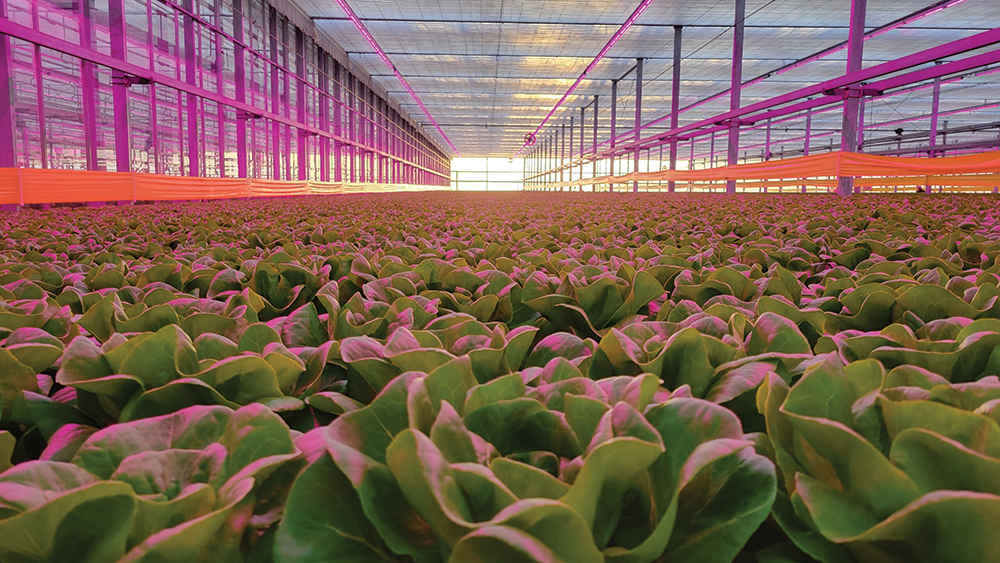
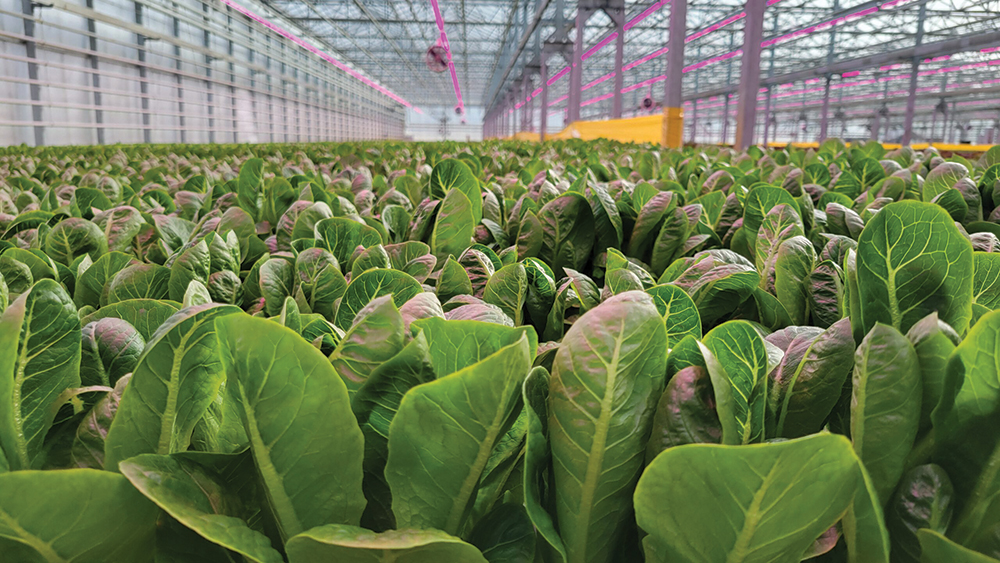
Great Lakes Growers is a Midwest hydroponic grower of fresh, nutritious lettuces and herbs — growing everything in a state-of-the art greenhouse using water instead of soil.
By providing its plants with the optimal amount of water and nutrients, the company can ensure better consistency and quality while preserving resources.
“We don’t store things,” said John Bonner, CEO, co-founder and head grower for the Middlefield, Ohio-based greenhouse. “We don’t pack things and put it in a cooler and hope to sell it later. We grow to what our customers forecast — though we don’t hold them accountable to that; it’s a handshake. But we harvest and ship within 24 hours.”
When the consumer gets the product in the grocery store, they will have 14 to 21 days of freshness. The same thing applies to restaurants. “Chefs want the quality they expect when they open the bag,” Bonner said.
Great Lakes Growers recycles all water, refrains from using chemicals or pesticides, and focuses on sustainability in all aspects of the business.
Cultivating a business
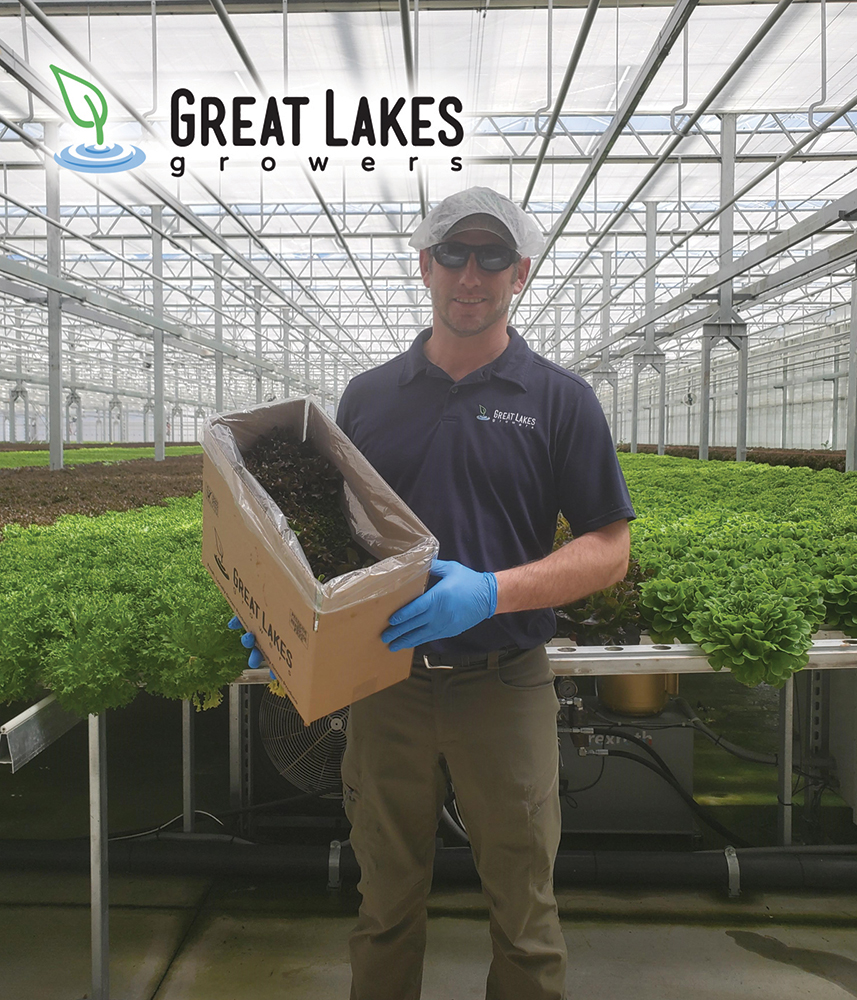
Bonner joined forces with Tim Ryan to start Great Lakes Growers in 2012.
Bonner was no stranger to the ag industry, having grown up on a family farm in Burton, Ohio, which included 30 acres of corn, soybeans and greenhouses.
“My family has been around the horticulture industry for decades,” he said.
His grandfather was well known in the area for running Burton Floral and Garden, the Midwest’s largest horticultural supply distributor, while John’s father owned Dillen Products, a top supplier of plastic containers for the plant industry. His sister owns Eagle Creek Growers, a six-acre annuals nursery.
By seeing those companies operate firsthand and marrying that knowledge with a college degree in business administration, Bonner ran his family’s greenhouse for six years after graduating. He had a progressive approach to production and sustainable energy, and he carved out a name for himself among growers in the area.
He eventually met Ryan, a political science major who earned his master’s in business administration from Cleveland State University.
The business grows
When Great Lakes Growers began, it was just one 300-square-foot greenhouse built from parts Bonner found at Home Depot. A dozen years later, the business operates more than 160,000 square feet and is almost fully automated.
“The only things we don’t do automatically are transplant and actual harvest,” he said. “For cut products, we cut it by hand. We’re about to make both those investments at the end of this year when we make our next expansion. We’ll add robotic transplanting and automatic harvesters then.”
Packaging and weighing are done automatically.
“That’s been an evolution, and COVID really spurred that on,” Bonner said. “The way I track things in my company is by labor efficiency, which is basically how many dollars do we generate per labor hour. And since COVID, that labor efficiency has doubled through training of our employees and also investment in this equipment.”
Relationship building
Great Lakes Growers has a team of approximately 40, a number which increases in the summer.
“Our biggest strength is our employees,” Bonner said.
Maintaining strong partnerships with vendors and seed suppliers has also been a major part of Great Lakes Growers’ evolution.
“The connections we have globally with what I consider to be some of the top tech-type companies and vendors for greenhouses, systems, those types of things help set us apart a little bit and allow us to be successful over a decade in this business,” Bonner said. “When I first started, there were no vertical farms, or very few of these companies here today. That longevity, I attribute to our relationships and employees.”
Going strong
Thanks to a completed expansion several years ago, Great Lakes Growers’ annual production is 12 million heads.
The company’s 70 SKUs are divided equally between retail and foodservice.
“COVID changed things a little bit, too,” Bonner said. “In this business, everyone’s first complaint is always about finding good help. In restaurant-type businesses, that has meant less demand for whole-head type production and more demand for fresh-cut, ready-to-eat products.”
Those ready-to-eat products are also more prominent today in grocery stores, as younger generations gravitate toward convenient, quick options.
“I think what makes our company unique is the breadth of it,” Bonner said. “We have a full line of herbs for both retail and food service. We offer a full line of whole head products for both, and we offer a full line of cut products for both foodservice and retail. Most of the companies I see out there specialize in one of those categories.”
When it’s time to add new products, Great Lakes Growers has a close relationship with its breeder partners and seed companies and will often work with them on new offerings.
“We’ll decide what we like from all the different standpoints — yield, quality, resilience, how does it taste?” Bonner said. “I’ll take it to someone in the marketplace, confidentially of course, and see if it’s an improvement on what we’re already doing and if the price is right. I’ll funnel that back to the breeder, and we’ll make a decision at that point.”
The company services customers from Toronto to South Dakota and the East Coast to Georgia.
“We do a lot of business in Canada now, where we are only five hours away,” Bonner said. “But we try to focus on the Midwest. I think companies lose a bit of a competitive advantage when you get too far away. So we focus on Michigan, Indiana, Ohio, Western Pennsylvania, Western New York, West Virginia and Northern Kentucky. That’s our sweet spot.”
Quality is always the ideal the company is searching for, and it remains one of its biggest challenges.
 “It can always be better,” Bonner said. “We are looking for yields in the 98.5% right now, and five years ago, we weren’t even sniffing that. We’re always looking to get that perfect yield and quality. It’s very hard to grow in the Midwest. We could have rains for three days in a row and it’s 30° F, and the next day it’s 75° F and sunny. That’s stressful on a plant and makes it challenging to deliver good quality all the time.”
Looking ahead
With more than a dozen years of success behind it, Great Lakes Growers isn’t going away anytime soon.
“It’s a massive market in North America, and I don’t know many companies that have been in the lettuce business as long as us,” Bonner said. “The biggest part of that market are two items that are very hard to grow in greenhouses — romaine and iceberg — and we are working hard with breeders to bring those to market. That’s where I see the biggest opportunity ahead.”
— A graduate of the University of Miami, Keith Loria is an award-winning journalist who has been writing for almost 20 years. View his recent writing at keithloria.contently.com.